
Best European Alternatives to Skype
Looking for a European alternative to Skype? Microsoft's Skype is a widely-used video calling platform, but it's owned by a US company and processes your data on American servers. For businesses and individuals who value privacy, GDPR compliance, and data sovereignty, European video calling alternatives offer compelling options.
We've curated the best privacy-focused video calling and messaging apps built in Europe. These alternatives provide excellent communication features while keeping your data protected under European law.

How we rank these tools — 4-step process
-
1
European ownership, verified
The company is headquartered and incorporated in the EU, EEA, the UK, Switzerland or Israel, and processes customer data in Europe or Israel. A US parent company disqualifies a tool from this page regardless of where its servers are.
-
2
Category fit and hands-on review
What the tool actually does, who it suits, and where it falls short — checked against the vendor’s own documentation, changelog and pricing page rather than its marketing copy.
-
3
Compliance and pricing check
GDPR posture, hosting location and the prices quoted on this page are verified against the vendor’s public pricing before publication, and re-checked when we revisit the category.
-
4
Position on this page
Placement on this page can be paid, and that can affect which tools appear here and the order they appear in. It never buys a good review: a tool that fails the checks above is not here at any price, and payment does not change the shortcomings we write about. A vendor can ask us to correct a factual error — not to remove a criticism.
Vendors can pay for visibility on this page. It never changes what an entry says about a product, including the criticism, and we earn nothing when you click through to a vendor. Paid placement can affect which tools appear here and the order they appear in. Editorial policy
Why Choose a European Alternative to Skype?
End-to-End Encryption
Many European alternatives offer true end-to-end encryption for all communications.
GDPR Protection
Your data stays in Europe, protected by the world's strongest privacy laws.
No US Surveillance
Free from CLOUD Act and other US data access laws.
Open Source Options
Many European video calling solutions are open source for full transparency.
Best European Alternatives to Skype
We've curated the best privacy-focused video calling apps from European companies. Each alternative has been evaluated for features, privacy, and GDPR compliance.

Jitsi Meet
Free, open-source video conferencing with no account required

Wire
Swiss end-to-end encrypted communication for teams and enterprises

Whereby
Norwegian browser-based video meetings - no downloads required
Element
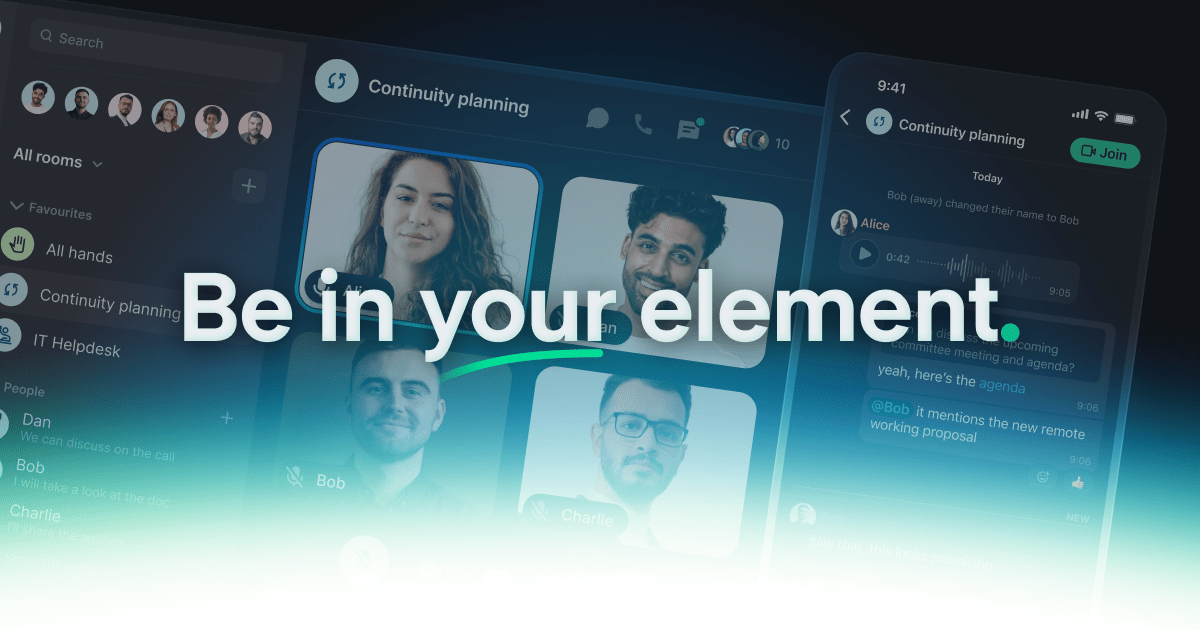
Decentralized, encrypted communication built on Matrix protocol

alfaview
Karlsruhe video platform priced per room, not per user, on German data centres only

Digital Samba
Barcelona video conferencing and embeddable video API on European hosting only

eyeson
Austrian video conferencing with innovative single-stream technology, powerful API, and EU data hosting - perfect for developers and enterprises

Livestorm
French browser-based webinar and video engagement platform with powerful automation, analytics, and CRM integrations - the European alternative to Zoom Webinars

meetergo
GDPR-compliant appointment scheduling with built-in video conferencing - Made in Germany, hosted in Frankfurt

OpenTalk
Berlin video conferencing under the EUPL, the first to carry the BSI IT security label

Pexip
Oslo-listed video platform that joins room systems to Teams and Google Meet, or runs air-gapped

Proton Meet
End-to-end encrypted video calls from Proton, using MLS so not even Proton can see the meeting
Key takeaways
- Skype was retired on 5 May 2025 and the data export deadline, first set at January 2026 and later extended to June 2026, has passed, so this is a migration that already happened to you rather than one you are planning.
- Signing into Teams Free with Skype credentials transfers chats and contacts in under a minute, which is convenient and is also the reason most people never chose a replacement.
- None of the four tools here calls a telephone number, so Skype Credit and Skype Numbers have no successor on this page.
- Element is the only option that gives you an address you own rather than a handle a company issues, which is the closest thing to what a Skype name used to be.
- Skype for Business Server 2015 and 2019 left support on 14 October 2025, so self-hosting now means Subscription Edition and a subscription licence.
Why people leave Skype
Nobody left Skype. Skype left. Microsoft retired it on 5 May 2025, and anyone who signed in afterwards with their Skype credentials had their chats and contact list moved into Microsoft Teams Free, which takes under a minute and was never really optional.
That makes this page different from every other comparison on this site. There is no vendor to negotiate with, no plan to downgrade and no setting to change. The account you spent fifteen years building is now a Teams account, and the window for taking your data out of Microsoft has closed — Microsoft first set the export deadline at January 2026 and then, in December 2025, extended it to June 2026.
So the question is not whether to switch. It is what to switch to, given that the thing you are replacing did two jobs — a worldwide directory of people, and a way to dial actual telephone numbers — and Teams Free only inherited the first one.
- The product was retired, not deprecated There is no legacy mode, no extended support tier and no paid escape hatch. 5 May 2025 was the end of consumer Skype as a service. Microsoft kept the Dial Pad alive in Teams Free and on the Skype web portal so remaining Credit could be spent, stopped automatic top-ups, and closed new Credit and calling subscriptions to new users. That is a wind-down, not a transition.
- Teams Free is not the same shape Skype was built around a person: your handle, your contact list, your presence, and the assumption that the people you called were outside your company. Teams is built around a tenant, and the free tier is a doorway to a paid workplace product. Families, tutors, translators and freelancers who used Skype to reach clients found themselves inside collaboration software designed for somebody else's org chart.
- The self-hosted version went too Skype for Business Server 2015 and 2019 left support on 14 October 2025. Microsoft shipped Skype for Business Server Subscription Edition in July 2025 as the only remaining on-premises option, licensed the same way as SharePoint and Exchange Subscription Edition — subscription licences, or licences with active Software Assurance, for both server and users. An organisation that ran its own Skype infrastructure to keep calls off somebody else's network now rents the right to keep doing so.
- Nothing here dials a phone number This is the honest limit of the whole page. Skype Credit and Skype Numbers turned an app into a telephone: cheap international calls, an inbound number in a country you did not live in. Jitsi, Wire, Whereby and Element are all meeting or messaging tools, and not one of them terminates calls on the public telephone network. If that was your Skype, your replacement is a SIP provider, not anything on this list.
What you have to replace, not just match
Write down which Skype you had, because the four options below answer three different versions of the question and none of them answers all of it.
Version one is the video call with someone outside your organisation — a client, a relative, a candidate — where the hard part was always getting them in. Version two is the handle: a name you printed on a business card in 2009 and that still worked in 2024, reaching you regardless of which company you worked for. Version three is telephony: Credit, Numbers, calls to landlines.
Jitsi and Whereby cover the first. Element is the only thing here that rebuilds the second, because a Matrix address belongs to a domain you control rather than to a vendor. Nothing covers the third, and any page that suggests otherwise has not checked.
The alternatives compared
| Position | Tool | Headquarters | Pricing | Jurisdiction |
|---|---|---|---|---|
| #1 | Jitsi Meet | Originally Strasbourg, France | Free and open source | Wherever you host it |
| #2 | Wire | Zug, Switzerland | Free (personal) / SMB €7.45/user/month billed annually, €8.94 monthly | Switzerland (adequacy decision, outside the EEA) |
| #3 | Whereby | Oslo, Norway | Free (1 room, 45 min) / from €6.99/month per host | EEA, not EU (Norway) |
| #4 | Element | London, United Kingdom | Free self-hosted / from about €5/user/month (managed) | United Kingdom (adequacy decision, outside the EEA) |
How each alternative compares to Skype
- Which law reaches it. Wherever you host it. Skype is run from the United States, so the CLOUD Act obliges the provider to hand over data on a valid order regardless of which country the servers are in.
- Where the data sits. Self-hosted anywhere, or meet.jit.si.
- Source code. Open source, where Skype is not: you can read what it does rather than take the description on trust.
Best for: Calling people who never wanted an account in the first place
The single property that kept Skype alive long after it stopped being good was that the other person already had it. Jitsi Meet takes that requirement away instead of meeting it: you create a room in a browser, send the URL, and whoever you sent it to joins by clicking. No handle to exchange, no client to download, no password for anyone to forget.
It is open source under Apache 2.0, and deployment is the distinction that matters. The public meet.jit.si service is operated by 8x8, Inc., which also owns the Jitsi trademark and sells the hosted JaaS edition — so using the public instance is trusting an American company, not a European one. Running your own install is what makes Jitsi a sovereignty answer, and it is the only option on this page where the call never reaches any company at all.
Set against Skype it loses the things that made Skype a piece of furniture rather than a tool. There is no contact list, no presence, no persistent identity and no offline messaging, so a missed call leaves no trace. It replaces the Skype call and not the Skype account.
What Jitsi Meet does better than Skype
- Nobody needs an account, where by the end Skype required a Microsoft account on both sides
- Nothing to install, against a desktop client Microsoft rewrote repeatedly over fifteen years
- Apache 2.0, so no company can retire it out from under you the way Skype was retired
- Self-hostable, which removes the vendor from the conversation rather than relocating it
- Free at any group size, with no credit to buy and no subscription to lapse
Where Jitsi Meet is a step down from Skype
- No contact list and no persistent handle: there is nothing to give someone the way you gave a Skype name
- No offline messaging, so a missed call leaves nothing behind
- No calls to telephone numbers, which is what Skype Credit existed for
- The public meet.jit.si runs on 8x8's servers, so the European version is the one you host yourself
Standout against Skype. Joining takes no account and no app, which is the requirement Skype imposed on everyone you ever wanted to call.
- Which law reaches it. Switzerland (adequacy decision, outside the EEA). Skype is run from the United States, so the CLOUD Act obliges the provider to hand over data on a valid order regardless of which country the servers are in.
- Where the data sits. EU (Germany, Ireland).
- Source code. Open source, where Skype is not: you can read what it does rather than take the description on trust.
Best for: Organisations whose Skype calls involved people outside the company
A large share of Skype's business use was not internal. It was the supplier, the contractor, the overseas client — people the corporate directory did not contain, reached through a public handle. Wire's Guest Rooms are the direct descendant of that: an outside participant opens a link in a browser, with no account and no installation, and the conversation stays end-to-end encrypted rather than dropping to plaintext email the moment an outsider is involved.
Wire Swiss GmbH is based in Zug, processes data in EU data centres in Germany and Ireland, and the platform is open source. Video conferences run to 150 participants on the paid business plan, with encrypted screen sharing. Wire for Free covers up to five people; Wire for SMB is €7.45 per user per month billed annually, €8.94 monthly, and Enterprise is quoted.
It is an organisation's purchase, though, and Skype was an individual's. Someone has to administer it, the integration ecosystem is small, and personal users consistently struggle to get their contacts to follow them. Wire also has no telephony: it covers the meeting and the message, not the number.
What Wire does better than Skype
- End-to-end encrypted by default for messages, calls and files, where Skype's encryption was the provider's to hold
- Guest Rooms give outsiders encrypted access with no account, replacing the reason people exchanged Skype handles
- Swiss company with EU data centres in Germany and Ireland, instead of a Redmond corporation
- Open source, so the encryption claims can be read rather than believed
- Still being sold and supported, which Skype has not been since May 2025
Where Wire is a step down from Skype
- No calls to telephone numbers, so Skype Credit has no equivalent here
- Bought and administered by an organisation, where Skype was installed by a person
- A far smaller integration ecosystem and no app marketplace
- Switzerland sits outside the EEA on an adequacy decision, so this is not EU establishment either
- Getting personal contacts to move across is the documented weak point
Standout against Skype. An external party joins an encrypted conversation from a browser with nothing installed, which is the job Skype handles were exchanged to do.
- Which law reaches it. EEA, not EU (Norway). Skype is run from the United States, so the CLOUD Act obliges the provider to hand over data on a valid order regardless of which country the servers are in.
- Where the data sits. Europe and global.
- Source code. Closed source, as Skype is.
- Independently checked. HIPAA compliant (Embedded).
Best for: Anyone who used to tell people "just call me on Skype"
The part of Skype that is hardest to replace is not a feature, it is a convention: one string you gave out once, that kept working for years. Whereby's permanent room URL is the nearest surviving equivalent. A host keeps whereby.com/your-company/meeting-room indefinitely, brandable and memorable, so the link on your invoice, your signature and your website is an address rather than a token regenerated for each call.
Whereby AS is in Oslo, inside the EEA with the GDPR applying in full. The call runs in the browser over WebRTC with nothing to install for guests.
The free tier is one room for four people, capped at 30 minutes; Pro is $10.99 a month for three rooms, 100 participants, no time limit and recording; Business is $13.99 per host a month with a three-host minimum and 200 participants. Whereby Embedded is a separate product, billed by participant minute, with HIPAA compliance sold as a paid add-on.
It is narrower than Skype in two ways worth stating. There is no messaging worth the name, no presence and no contact list, so it replaces the call and not the app. And the free tier stops at four participants and 30 minutes, a limit Skype never applied to a one-to-one call, so the free comparison flatters Skype rather than Whereby.
What Whereby does better than Skype
- A permanent, brandable room URL that behaves like the Skype handle you used to hand out
- Guests join in a browser with no download and no account
- Norwegian company inside the EEA, with the GDPR applying in full
- Whereby Embedded puts the same video inside your own product, billed by participant minute
- A product with a roadmap, rather than one with a retirement date behind it
Where Whereby is a step down from Skype
- The free tier stops at four people and 30 minutes, where a one-to-one Skype call had no clock on it
- No chat, presence or contact list, so it covers only the meeting
- No calls to landlines or mobiles
- Call quality tracks the participant's browser and hardware, and older machines struggle in larger rooms
Standout against Skype. The room URL never changes, so you can print it — the one Skype habit that has a real successor.
- Which law reaches it. United Kingdom (adequacy decision, outside the EEA). Skype is run from the United States, so the CLOUD Act obliges the provider to hand over data on a valid order regardless of which country the servers are in.
- Where the data sits. Self-hosted, or European managed options.
- Source code. Open source, where Skype is not: you can read what it does rather than take the description on trust.
Best for: People who want an identity that outlives whoever is running the servers
Skype's genuinely original idea was a single worldwide namespace. One name reached one person, across companies, countries and employers, and it did not matter who either of you worked for. Matrix is the only architecture here that rebuilds that, and Element is its main client: an address like @you:yourdomain lives on a server you or your organisation runs, and federation means people on other servers still reach it.
Element (New Vector Ltd) is in London, which is outside the EEA under a UK adequacy decision, and that is precisely why the self-hosted route matters more here than the vendor's address does. It is open source and free to self-host, with managed hosting from about €5 per user per month including European options. Bridges connect Matrix to Slack, Discord, Telegram, WhatsApp, Signal and IRC, so people who will not move can still be reached.
It also asks the most of its users of anything on this page. Synapse is resource-intensive, federation can delay delivery, and device verification and key backup are concepts your relatives will not learn. As a straight replacement for calling your mother, it is the wrong tool; as a replacement for a permanent identity that no vendor can retire, it is the only one.
What Element does better than Skype
- Your address sits on a domain you control, where a Skype name was always Microsoft's to withdraw
- Federated, so two organisations communicate without either joining the other's system
- Open source and free to self-host, with European managed hosting available
- End-to-end encrypted across federated servers by default
- Bridges to Slack, Discord, Telegram, WhatsApp, Signal and IRC, so contacts can be reached where they already are
Where Element is a step down from Skype
- Key verification and device management defeat non-technical users, which Skype never asked of anyone
- Synapse needs real infrastructure planning, so self-hosting is a commitment rather than an afternoon
- Calls are competent rather than excellent, and Skype's were its best feature
- New Vector Ltd is in London, so UK adequacy rather than EU establishment
- No telephony of any kind
Standout against Skype. An address on your own domain is the only thing here that cannot be retired by the company that issued it.
What actually breaks when you switch
The contact list is the loss, and it is not recoverable by tooling. Skype identifiers were Microsoft account references and mean nothing anywhere else, so there is no import for any of these four and there never will be. Go through the list by hand, write down the people you have actually spoken to in the last two years, and invite those. For most people that is fewer than twenty names and takes an evening.
Telephony is the second gap and the one people discover late. If part of your Skype was dialling ordinary numbers or receiving calls on a Skype Number, none of the tools here does that, and a separate SIP or cloud telephony contract is the answer. Sort that out before you cancel anything, because an inbound number that lapses cannot be reclaimed.
Then there is the long tail of other people. Skype links and handles are embedded in old email signatures, CVs, agency profiles and printed cards, and they will keep sending people to a product that no longer exists. Decide on one replacement address, put it everywhere at once, and accept that for the next year somebody will still try the old one.
My chats already moved to Teams. Is anything still recoverable?
Not from Microsoft. The deadline for exporting Skype data was originally January 2026; in December 2025 Microsoft extended it to June 2026. That date has passed, so whatever you did not download then is not retrievable now.
What you do still have is the copy inside Teams Free, because the transfer moved conversation history and contacts rather than referencing them. Before you stop using that account, work through the contact list by hand and record the handful of people you actually need to reach. That list is the part of Skype worth carrying forward, and it is the part that does not export into any of the tools below.
What replaces Skype Credit and a Skype Number?
A telephony provider, not a meeting tool. Skype was unusual in being both an internet calling app and a carrier: you bought Credit to dial ordinary numbers, and you could rent an inbound number in a country you did not live in so relatives or customers dialled a local call.
That function is now bought separately, from a SIP trunk or a cloud telephony provider, and there are European ones. What matters for this page is that Jitsi, Wire, Whereby and Element do not do it, and choosing one of them does not remove the need.
If you still hold a Skype Number, porting it had to be arranged with the receiving carrier rather than with Microsoft, under deadlines that varied by country. If yours has lapsed, it is gone, and a new number from a new provider is the only route.
Is a European tool actually different, given Skype was ending anyway?
The difference is who gets to make this decision next time. Skype was retired by a single company in Redmond because Skype no longer fitted its product strategy, and there was no version of the arrangement in which users had a say.
Two of the four options here remove that possibility structurally rather than promising not to do it. Jitsi is Apache 2.0 and Element is built on an open protocol, so both can be run on a server you control and neither can be switched off for you. Wire and Whereby are ordinary companies, in Zug and Oslo respectively, which is a jurisdiction change rather than a control change.
That is the honest framing: leaving Microsoft for another vendor swaps one retirement risk for another. Only self-hosting actually retires the risk.
What about Skype for Business — is that the same story?
Related, and on a slower timetable. Skype for Business Server 2015 and 2019 reached end of support on 14 October 2025, so those installations no longer receive security updates. Microsoft released Skype for Business Server Subscription Edition in July 2025, and it is now the only supported on-premises version.
The licensing changed with it: Subscription Edition follows the same model as SharePoint and Exchange Subscription Edition, meaning subscription licences or active Software Assurance for both server and user licences. An organisation that bought a perpetual server licence once and ran it for six years is now on a renewal cycle.
For internal meetings that is the point where Element with a self-hosted homeserver, or a Jitsi install, becomes a genuine comparison rather than a hobbyist suggestion. For telephony integration it is not, and that is usually why these deployments existed.
Which one to pick
If what you want back is the ability to call someone who has nothing installed and no intention of installing anything, Jitsi Meet is the answer, and self-host it if the reason you are here is that you would rather not depend on an American company again.
If the calls are work and the people on them are outside your organisation, Wire is the right destination: encrypted by default, Swiss, with Guest Rooms that do what exchanging Skype handles used to do.
If you want somewhere permanent to point people at, Whereby gives you a fixed room address from $10.99 a month, and Element gives you an address on your own domain for the cost of running a server. The first is easier and the second is yours.
And if the part of Skype you actually used was the telephone, none of this replaces it. Buy telephony from a telephony provider, pick one of the four above for the meetings, and stop looking for a single product that does both — since May 2025 there has not been one.
Frequently Asked Questions
No. Microsoft retired consumer Skype on 5 May 2025. Signing in with Skype credentials moves chats and contacts into Microsoft Teams Free, and the Skype web portal survives only as a Dial Pad for spending remaining Credit. Skype for Business is a separate product on its own schedule.
It depends which half of Skype you miss. Jitsi Meet if the point was calling someone who has no account and never wants one. Wire if the calls are work and confidentiality is the requirement, remembering that Switzerland sits outside the EEA. Whereby if you need a permanent address people can meet you at. Element if you want a handle that belongs to your own domain rather than to a company. None of the four dials a telephone number.
No. Microsoft set January 2026 as the deadline for exporting Skype data and then extended it to June 2026. That deadline has passed. Anything still in your possession is the copy that transferred into Teams Free, not an export you can request now.
Remaining Credit stayed spendable through the Dial Pad in Teams Free and on the Skype web portal, with automatic top-up switched off and no new Credit or calling subscriptions sold. Skype Numbers stayed active until their subscription expiry, and moving one to another provider had to be arranged with that provider, with deadlines that differed by country.
No, and that is the clearest gap on this page. Jitsi Meet, Wire, Whereby and Element are internet meeting and messaging tools. Calls to landlines and mobiles need a SIP trunk or a cloud telephony provider bought separately, and several European ones exist. Treat it as a second purchase rather than a feature to look for in the four below.
For one-to-one and small group chat with people who are also on Teams, it works and it already has your history. What it is not is a product designed around individuals: Teams is organised around a tenant, and the free tier funnels towards a paid workplace licence. Freelancers, tutors and families who used Skype precisely because it crossed company boundaries are the group it fits worst.
Yes, two of them. Jitsi Meet is Apache 2.0 and can run entirely on your own server, and Element runs against a Matrix homeserver you operate, typically Synapse. In both cases no company is left holding the conversation, which is a stronger position than moving to a vendor in a country you prefer. The cost is that somebody has to run, patch and back up the server.
Jitsi Meet, by a distance. You send a link, they click it, and they are in the call — no account, no download, no password to reset over the phone. Whereby behaves the same way and adds a room address that never changes, which is easier to write down. Element is the wrong answer for this: device verification and encryption keys are a concept, and a concept is exactly what you are trying to avoid.
No. Skype contacts were Microsoft account identifiers and mean nothing to Jitsi, Wire, Whereby or Element. There is no import path and there will not be one. The practical approach is to copy out the names you genuinely still contact — for most people that is between five and twenty — and invite them individually.
Related comparisons
European tools head to head
About the author
Explore More European Alternatives
Discover privacy-focused European alternatives to other popular US tech services.