
Jitsi Meet
Open-source video conferencing with no account required, end-to-end encryption, and full self-hosting capability - the ultimate privacy-focused alternative to Zoom

Quick Overview
| Company | 8x8, Inc. (Open Source Project) |
|---|---|
| Category | Video Conferencing |
| Headquarters | Open Source (Originally Strasbourg, France) |
| EU Presence | Yes - European origins, self-hostable in EU |
| Data Centers | Self-hosted anywhere / meet.jit.si servers global |
| Open Source | Yes (Apache 2.0) |
| GDPR Compliant | Yes (when self-hosted) |
| Self-Hosting | Yes |
| Main Features | No account needed, screen sharing, recording, E2EE, unlimited participants, breakout rooms |
| Pricing | Free (Open Source) |
| Best For | Privacy-conscious users and organizations wanting full control over video meetings |
| Replaces | Zoom, Google Meet, Microsoft Teams |
Detailed Review
Jitsi Meet is one of the most popular open-source video conferencing solutions in the world, offering a powerful alternative to proprietary platforms like Zoom and Google Meet. Originally developed in Strasbourg, France by Emil Ivov in 2003, Jitsi has grown into a comprehensive communication platform that prioritizes privacy, openness, and user freedom. The project is now stewarded by 8x8, Inc., but remains fully open source under the Apache 2.0 license.
European Origins and Open Source Philosophy
Jitsi's origins trace back to France, where it was created as an open-source alternative to proprietary communication tools. This European heritage is reflected in its privacy-first approach and commitment to user rights. Unlike commercial platforms that monetize user data, Jitsi is community-driven and transparent. All source code is publicly available on GitHub, allowing anyone to audit, modify, and deploy their own instance.
The open-source nature of Jitsi means that organizations can achieve complete data sovereignty by self-hosting. European companies, government agencies, and privacy-conscious organizations can run Jitsi on their own infrastructure within the EU, ensuring full GDPR compliance and eliminating any third-party data processing concerns.
No Account Required - Instant Meetings
One of Jitsi Meet's most distinctive features is that no account is required for anyone - hosts or participants. You can start a meeting instantly by simply visiting meet.jit.si (or your own Jitsi server) and creating a room. Participants join by clicking a link, with no registration, downloads, or app installations needed. This frictionless approach respects user privacy by not collecting personal information.
For added security, rooms can be password-protected and hosts can enable a lobby feature that requires approval before participants can join. This prevents unwanted attendees while maintaining the simplicity of instant access.
End-to-End Encryption
Jitsi Meet offers optional end-to-end encryption (E2EE) for meetings, ensuring that only participants can access the audio and video content - not even the server operator. When E2EE is enabled, all media is encrypted on the sender's device and can only be decrypted by other meeting participants. This is particularly important for sensitive discussions where confidentiality is paramount.
The E2EE implementation uses the Insertable Streams API in supported browsers, providing robust security without requiring special client software. This makes Jitsi one of the most secure video conferencing options available.
Comprehensive Feature Set
Despite being free and open source, Jitsi Meet includes features that rival or exceed commercial platforms. Screen sharing supports sharing your entire screen, application windows, or browser tabs. Recording can be done locally or to cloud storage services like Dropbox. Breakout rooms allow larger meetings to split into smaller discussion groups.
Additional features include virtual backgrounds and blur, hand raising, participant polls, live streaming to YouTube, chat with emoji reactions, speaker statistics, and integration with calendar applications. The mobile apps for iOS and Android provide full functionality on the go.
Self-Hosting Flexibility
Jitsi's self-hosting capability is one of its greatest strengths. Organizations can deploy Jitsi on their own servers, whether on-premises or in a cloud provider of their choice. This provides complete control over data, security configurations, and customization. The Jitsi team provides Docker containers and installation guides for easy deployment on Linux servers.
For European organizations, self-hosting Jitsi on EU-based infrastructure (such as Hetzner, OVHcloud, or Scaleway) ensures that all video conference data remains within EU borders and under EU jurisdiction. This is invaluable for GDPR compliance and data sovereignty requirements.
Scalability and Performance
Jitsi is designed to scale from small team meetings to large conferences. The Jitsi Videobridge (JVB) component uses a Selective Forwarding Unit (SFU) architecture that efficiently routes video streams between participants. For very large deployments, multiple JVB instances can be deployed behind a load balancer.
The Jibri component enables server-side recording and live streaming, while Ocsserver (Ocsgenserver) handles participant presence. These modular components allow organizations to build the exact infrastructure they need.
Integration and Customization
Jitsi Meet can be embedded into other applications using the JaaS (Jitsi as a Service) API or the open-source IFrame API. This allows developers to integrate video conferencing directly into their products. The interface can be extensively customized with branding, feature toggles, and UI modifications.
Jitsi also integrates with Ocsservices like Ocsserver, Matrix, and various calendar applications. For organizations using Ocsserver or Matrix for messaging, Jitsi provides seamless video calling within those platforms.
Limitations to Consider
While Jitsi is powerful, there are some considerations. The public meet.jit.si service, while free, is not recommended for highly sensitive meetings as you're trusting 8x8's servers. For maximum privacy, self-hosting is recommended but requires technical expertise. Very large meetings (100+ participants) may require careful server configuration and adequate resources.
Some advanced enterprise features like SSO integration and detailed analytics require additional configuration or third-party tools. However, the active community and extensive documentation make most challenges surmountable.
Who Should Use Jitsi Meet
Jitsi Meet is ideal for anyone who values privacy and transparency in their video communications. It's perfect for privacy-conscious individuals who want secure video calls without creating accounts, organizations requiring data sovereignty and GDPR compliance, developers building video features into their applications, and anyone who believes communication tools should be open and auditable. The self-hosting option makes it particularly attractive for European businesses, government agencies, and healthcare organizations with strict compliance requirements.
Pros and Cons
Pros
- No account required for hosts or participants
- Free and open source under Apache 2.0
- Self-hostable, so no third party need ever see the meeting
- E2E encryption, breakout rooms, recording and screen sharing included
- Password protection and a lobby without requiring registration
Cons
- Public meet.jit.si means trusting 8x8's servers
- Self-hosting requires real technical expertise
- Meetings above ~100 participants need careful server configuration
- SSO and detailed analytics need extra configuration or third-party tools
Alternatives to Jitsi Meet
Looking for other European video conferencing solutions? Here are some alternatives worth considering:

Whereby
Norwegian browser-based video conferencing

eyeson
Austrian video conferencing platform

Nextcloud Talk
German self-hosted video conferencing
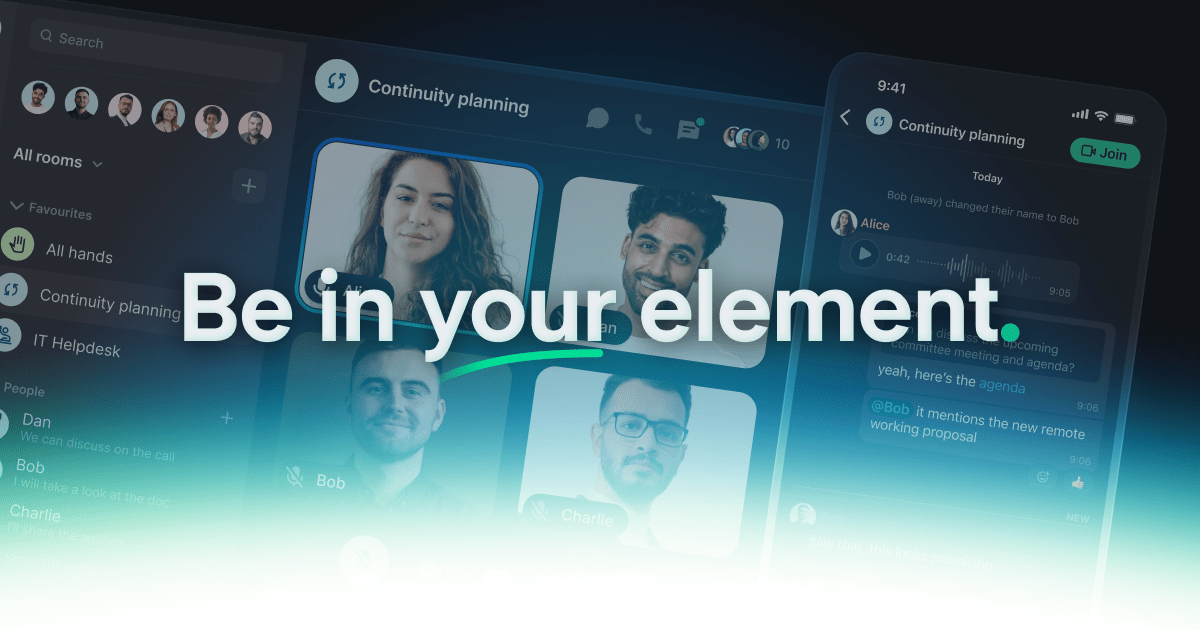
Element
UK-based Matrix video calls
Frequently Asked Questions
Yes, Jitsi Meet is completely free and open source under the Apache 2.0 license. You can use the public meet.jit.si service for free, or self-host your own instance on your own infrastructure at no cost beyond your hosting expenses.
No, neither hosts nor participants need to create an account. You can start or join a meeting instantly by visiting a Jitsi URL. For added security, hosts can optionally protect rooms with passwords or enable a lobby feature.
Yes, self-hosting is one of Jitsi's key features. You can deploy Jitsi on your own servers using Docker containers or native Linux packages. This gives you complete control over your data and is recommended for organizations with privacy or compliance requirements.
Yes, Jitsi Meet offers optional end-to-end encryption (E2EE) that ensures only meeting participants can access the audio and video content. When enabled, not even the server operator can decrypt the media streams.
Yes, especially when self-hosted on EU infrastructure. By deploying Jitsi on servers within the EU, you maintain complete control over data processing and can ensure full GDPR compliance. The no-account-required approach also minimizes personal data collection.
There's no hard limit on participants - it depends on your server capacity. For self-hosted instances, meetings of 75-100+ participants are achievable with proper server configuration. The public meet.jit.si service may have practical limits during peak usage.
Yes, Jitsi supports both local recording (saved to your device) and cloud recording via Dropbox. For self-hosted instances, the Jibri component enables server-side recording and live streaming to platforms like YouTube.
Jitsi was originally created in Strasbourg, France in 2003 by Emil Ivov. It has European roots and has always maintained a privacy-first, open-source philosophy. The project is now supported by 8x8, Inc. but remains fully open source.
Yes, Jitsi Meet can be embedded into other applications using the open-source IFrame API or through JaaS (Jitsi as a Service). Developers can integrate video conferencing directly into their products with extensive customization options including branding, feature toggles, and UI modifications. This makes Jitsi an excellent choice for building video features into SaaS products, telehealth platforms, or educational tools.
Yes, Jitsi Meet includes breakout rooms functionality that allows larger meetings to split into smaller discussion groups. Moderators can create multiple breakout rooms, assign participants, and bring everyone back to the main session when finished. This feature is available on both the public meet.jit.si service and self-hosted instances, making Jitsi suitable for workshops, training sessions, and collaborative meetings.
Jitsi Meet is built as a European alternative to Zoom: Open-source video conferencing with no account required, end-to-end encryption, and full self-hosting capability - the ultimate privacy-focused alternative to Zoom. It will not be a like-for-like feature match in every respect, so check the review above for where the two genuinely differ before switching.
Jitsi Meet is one of several European Video Conferencing tools covered on this site. See the full Video Conferencing category page for how it ranks against its closest European competitors.