Element
UK-based Matrix messaging client with decentralized communication, E2E encryption, and bridges to other platforms - a privacy-first alternative to Slack

Quick Overview
| Company | Element (New Vector Ltd) |
|---|---|
| Category | Messaging |
| Headquarters | London, UK |
| EU Presence | Yes - UK (European) |
| Data Centers | Self-hosted or European options available |
| Open Source | Yes |
| GDPR Compliant | Yes |
| End-to-End Encryption | Yes |
| Main Features | Decentralized Matrix protocol, E2E encryption, bridges to other platforms, self-hosting option |
| Pricing | Free (self-host) / From €5/user/month (managed) |
| Best For | Organizations seeking decentralized, secure team communication with data sovereignty |
| Replaces | Slack, Microsoft Teams, Discord |
Detailed Review
Element is a powerful messaging and collaboration platform built on the Matrix open standard, developed by Element (formerly New Vector Ltd) in London, UK. Since its founding in 2017, Element has become the flagship client for the Matrix protocol, offering organizations a decentralized alternative to centralized messaging platforms like Slack and Microsoft Teams. The platform has gained significant traction in government and enterprise sectors, with notable adoptions by the French government, German military, and various healthcare organizations.
The Matrix Protocol Foundation
Element is built on Matrix, an open standard for decentralized, real-time communication. Unlike traditional messaging platforms where all data flows through a single company's servers, Matrix allows organizations to run their own servers (called homeservers) while still communicating with users on other Matrix servers. This federated approach is similar to how email works - you can send messages to anyone on the network regardless of which server they use.
This decentralized architecture provides several key advantages. Organizations maintain complete control over their data, choosing where it's stored and who has access. There's no vendor lock-in since the protocol is open and multiple clients exist. Even if Element as a company were to disappear, the Matrix network and your data would continue to exist. This resilience makes Matrix particularly attractive for governments and organizations with strict data sovereignty requirements.
Government and Enterprise Adoption
Element's strongest endorsement comes from its adoption by major government entities. The French government chose Matrix and Element as the basis for their secure messaging platform "Tchap," used by hundreds of thousands of civil servants. The German military (Bundeswehr) deployed Element as their primary messaging system, citing the need for secure, sovereign communication infrastructure. These high-profile deployments demonstrate the platform's security credentials and scalability.
Beyond government, Element has found success in healthcare, education, and technology sectors. The platform's ability to meet strict compliance requirements while offering modern collaboration features makes it suitable for regulated industries. The Mozilla Foundation, KDE community, and numerous universities have also adopted Matrix-based communication.
End-to-End Encryption
Element implements end-to-end encryption using the Olm and Megolm cryptographic ratchets, based on the Signal protocol's double ratchet algorithm. This means that messages are encrypted on the sender's device and can only be decrypted by the intended recipients. Not even the server operators can read the content of encrypted conversations.
Unlike some platforms where encryption is optional or limited to certain features, Element enables encryption by default for private rooms and direct messages. Group conversations can also be encrypted, with the Megolm protocol optimized for efficient key distribution in group settings. Cross-signing and key verification features help users verify the identity of their contacts and detect potential man-in-the-middle attacks.
Bridges to Other Platforms
One of Element's most powerful features is its ability to bridge to other messaging platforms. Through Matrix bridges, users can communicate with people on Slack, Discord, Telegram, WhatsApp, Signal, IRC, and many other platforms - all from within Element. This means organizations can consolidate their communications without forcing everyone to switch platforms immediately.
Bridges work by creating virtual users that mirror messages between Matrix and the bridged platform. While this adds some complexity and bridges may have limitations depending on the target platform's API restrictions, it provides a practical migration path for organizations with diverse communication needs. The ability to bridge to legacy systems also makes Element valuable for organizations that need to maintain compatibility with existing infrastructure.
Self-Hosting and Data Sovereignty
Element can be self-hosted entirely on your own infrastructure, giving organizations complete control over their data. The server component, called Synapse (or the newer Dendrite), is open source and can be deployed on-premises or in a private cloud. This is particularly valuable for organizations in regulated industries or those with strict data residency requirements.
For organizations that prefer a managed solution, Element offers Element Server Suite (ESS) and Element Cloud, which provide hosted Matrix services with enterprise support. These options allow organizations to benefit from Element's infrastructure expertise while maintaining compliance with their specific requirements. European data center options are available for organizations requiring EU data residency.
Features and User Experience
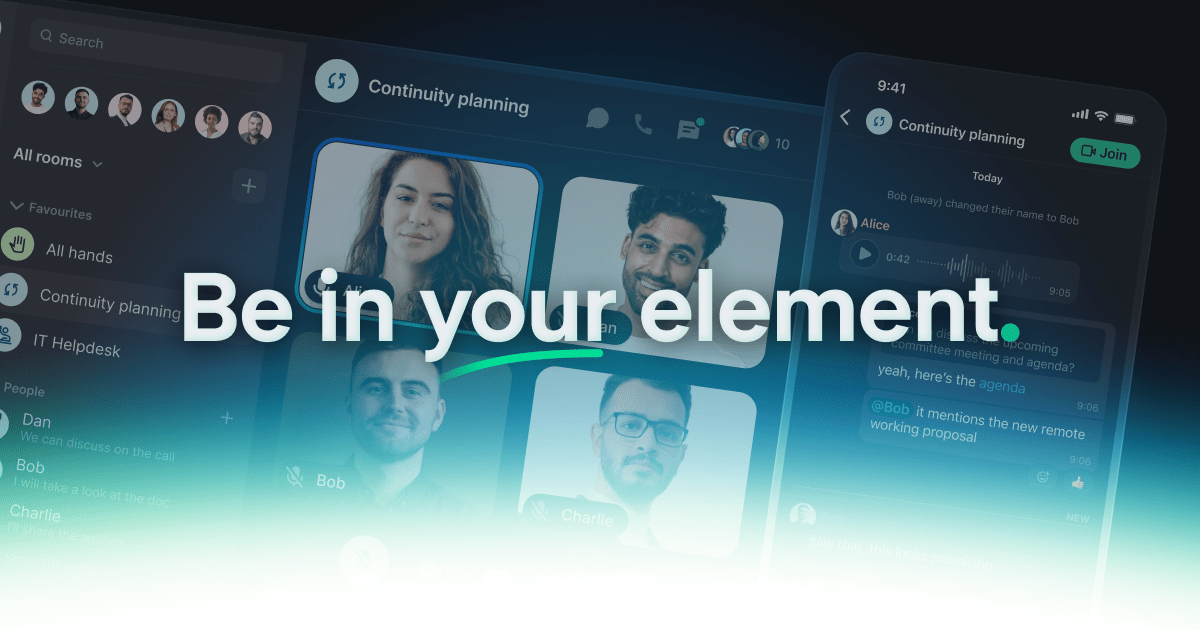
Element provides a full-featured messaging experience with direct messages, group chats (called rooms), voice and video calls, file sharing, and integrations with external services. The interface is modern and familiar to users of other messaging platforms. Threads help organize conversations within busy channels, and spaces allow organizations to structure their rooms hierarchically.
The platform supports rich formatting, code blocks, reactions, and custom emojis. Integration capabilities include bots, webhooks, and widgets that can embed external applications directly into rooms. These features make Element suitable not just for casual communication but for serious team collaboration and project management workflows.
Pricing and Plans
Element's pricing model reflects its flexible deployment options. Self-hosting is completely free - you can run your own Matrix server and use the Element client at no cost. This makes it an attractive option for organizations with the technical capability to manage their own infrastructure.
For managed services, Element Cloud starts at €5 per user per month for the Starter tier, which includes core messaging features and basic support. Professional and Enterprise tiers add advanced features like single sign-on integration, compliance tools, and priority support. Custom pricing is available for large deployments with specific requirements.
Considerations and Limitations
Element and Matrix have a steeper learning curve compared to centralized platforms. The decentralized nature, while powerful, adds complexity. Federation between servers can sometimes cause message delivery delays, and the encryption key management can be confusing for non-technical users who need to verify devices and manage key backups.
Performance has historically been a concern, particularly for large Matrix deployments. The Synapse server implementation can be resource-intensive, though the team has made significant improvements and the newer Dendrite server promises better performance. Organizations should carefully plan their infrastructure for larger deployments.
Who Should Use Element
Element is ideal for organizations that prioritize data sovereignty and want complete control over their communication infrastructure. Government agencies, healthcare organizations, and enterprises in regulated industries will appreciate the compliance capabilities. Tech-savvy organizations comfortable with self-hosting can benefit from the platform at no cost. Teams that need to communicate across multiple platforms will value the bridge functionality. For organizations seeking a European alternative to US-based collaboration tools with genuine open-source credentials and government-grade security, Element is a compelling choice.
Pros and Cons
Pros
- Matrix federation with full self-hosting and data sovereignty
- Bridges to Slack, Discord, Telegram, WhatsApp, Signal and IRC
- Open source, with government and enterprise adoption
- Free self-hosted, or managed with European hosting
- End-to-end encryption across federated servers
Cons
- Steeper learning curve than centralised platforms
- Federation can delay message delivery
- Key management confuses non-technical users
- Synapse is resource-intensive at scale
Alternatives to Element
Looking for other European messaging platforms? Here are some alternatives worth considering:

Threema
Swiss secure messaging with anonymous use

Wire
Swiss secure collaboration platform

Rocket.Chat
Self-hosted team collaboration platform

Nextcloud Talk
Integrated communication for Nextcloud
Frequently Asked Questions
Matrix is the open protocol and standard for decentralized communication. Element is a client application (like an app) that uses the Matrix protocol. Think of Matrix as the technology (like email) and Element as the app you use to access it (like Outlook or Gmail). Other Matrix clients exist, but Element is the most popular and feature-complete.
Yes, Element is completely free to use. You can create a free account on the matrix.org server or self-host your own server at no cost. Paid plans are available for organizations that want managed hosting, enterprise features, and dedicated support. The core software is open source under the Apache 2.0 license.
Yes, through Matrix bridges. Bridges allow Element users to communicate with users on Slack, Discord, Telegram, WhatsApp, Signal, IRC, and other platforms. Setting up bridges requires some technical configuration, especially for self-hosted deployments. Element's managed service includes bridge support for easier setup.
Element and Matrix are used by the French government (through their Tchap platform), the German military (Bundeswehr), and various other government agencies across Europe. These deployments demonstrate the platform's suitability for high-security, regulated environments requiring data sovereignty.
Element uses encryption based on the same double-ratchet algorithm that Signal pioneered, providing comparable end-to-end encryption for messages. The key difference is architecture: Signal is centralized, while Element/Matrix is decentralized. Element offers data sovereignty and self-hosting, while Signal may be simpler for personal use. Both are considered highly secure.
Yes, Element is GDPR compliant. The company is based in the UK and offers European data center options for managed services. Self-hosted deployments give organizations complete control over data storage location and processing. Element provides data processing agreements and documentation to support compliance requirements.
Yes, migration from Slack is possible. Element provides import tools for Slack history, and bridges can be used during a transition period to allow gradual migration. The workspace structure in Element (using spaces and rooms) is conceptually similar to Slack's channels, making the transition familiar for users.
Yes, Element supports voice and video calls, including group calls. For larger video conferences, Element integrates with Jitsi Meet, an open-source video conferencing solution. Element Call, a native WebRTC-based calling feature, provides end-to-end encrypted video calls built directly into the Matrix protocol.
Element is built as a European alternative to Slack: UK-based Matrix messaging client with decentralized communication, E2E encryption, and bridges to other platforms - a privacy-first alternative to Slack. It will not be a like-for-like feature match in every respect, so check the review above for where the two genuinely differ before switching.
Element is one of several European Messaging tools covered on this site. See the full Messaging category page for how it ranks against its closest European competitors.