
Best European Alternatives to Discord
Looking for a European alternative to Discord? Discord collects extensive user data, scans messages, and stores everything on US servers with no end-to-end encryption.
European community platforms offer similar features with better privacy, optional encryption, and data stored in Europe.

How we rank these tools — 4-step process
-
1
European ownership, verified
The company is headquartered and incorporated in the EU, EEA, the UK, Switzerland or Israel, and processes customer data in Europe or Israel. A US parent company disqualifies a tool from this page regardless of where its servers are.
-
2
Category fit and hands-on review
What the tool actually does, who it suits, and where it falls short — checked against the vendor’s own documentation, changelog and pricing page rather than its marketing copy.
-
3
Compliance and pricing check
GDPR posture, hosting location and the prices quoted on this page are verified against the vendor’s public pricing before publication, and re-checked when we revisit the category.
-
4
Position on this page
Placement on this page can be paid, and that can affect which tools appear here and the order they appear in. It never buys a good review: a tool that fails the checks above is not here at any price, and payment does not change the shortcomings we write about. A vendor can ask us to correct a factual error — not to remove a criticism.
Vendors can pay for visibility on this page. It never changes what an entry says about a product, including the criticism, and we earn nothing when you click through to a vendor. Paid placement can affect which tools appear here and the order they appear in. Editorial policy
13 European Alternatives to Discord
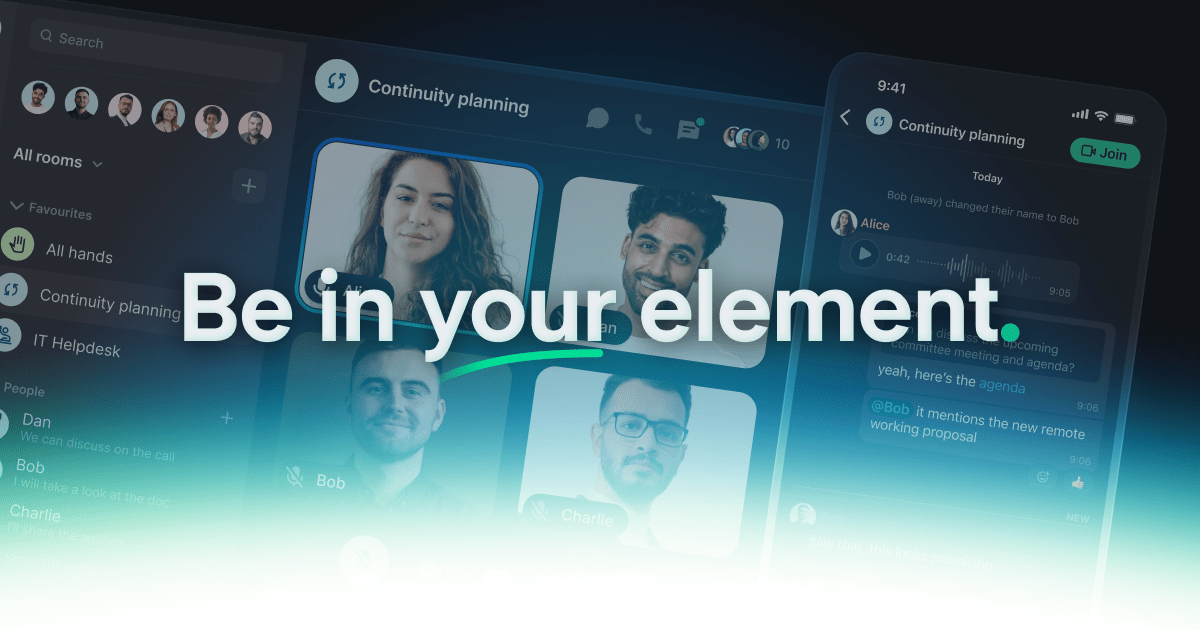
Element
Community spaces with Matrix decentralization

TeamSpeak
Voice chat platform with self-hosting options

Revolt
Open-source Discord alternative with self-hosting

Briar
European peer-to-peer messenger with Tor routing that works without internet - designed for activists and journalists

Delta Chat
Encrypted messenger built on email, so any email or chatmail server can carry it

ginlo
Munich messenger with a free private app and a managed business edition

HansaChat
German team chat billed per workspace instead of per user, hosted on IONOS Cloud in the EU - a Slack alternative for teams that grew tired of per-seat pricing

Olvid
French messenger with no phone number and no central directory, holding an ANSSI CSPN visa
Session
Decentralized messenger with no phone number required, onion routing, and community-run infrastructure - truly anonymous messaging

SimpleX Chat
UK-based messenger with no user identifiers - no phone numbers, no usernames, no accounts, just complete privacy

Teamwire
German business messenger for public safety and healthcare, on IONOS or on-premise

Threema
Swiss secure messaging with anonymous use, E2E encryption, and no phone number required - a privacy-first alternative to WhatsApp

Balsio
A newly launched Latvian messaging app for professional communication - a European alternative to WhatsApp built around EU Digital Markets Act interoperability
Key takeaways
- Discord's voice and video calls have been end-to-end encrypted since September 2024 under the DAVE protocol; the text has never been, and Discord has said it has no plan to change that.
- Discord Netherlands BV is the controller for EEA users, but the privacy policy still places processing and storage on servers in the United States, with no European region available to pick.
- Approximately 70,000 government-ID photographs were exposed in the October 2025 support-vendor breach, before the global age check had even begun.
- Calling TeamSpeak the German option is half the story: its own privacy policy names a Californian company as a controller beside the German one.
- Revolt now calls itself Stoat, and the rename reached the self-hosting instructions on 5 October 2025.
Why people leave Discord
People do not leave Discord because it is bad at what it does. It is the best thing anyone has built for a group of strangers who want to sit in a voice channel for four hours. They leave when they notice that the community they spent three years building is not theirs.
A Discord server exists only inside Discord's account system. The channels, the roles, the pinned decisions, the custom emoji, the six thousand people who joined: none of that has a file format, and there is no export that reconstitutes it anywhere else. You are not storing a community on Discord. You are renting the room it happens in, from a company in San Francisco, on terms it writes.
Since October 2025 that has had a sharper edge. Discord had begun collecting government ID photos for age appeals, and a support vendor it used lost roughly 70,000 of them. The identity check arrived before the machinery capable of holding the identities.
- The community has no export Every other category on this site has a migration path: files copy, tickets export to CSV, mailboxes move over IMAP. A Discord server has none. Channel structure, role hierarchies, permission overwrites, emoji, stickers, years of searchable history and the member list itself are account-system objects rather than data you hold. Third-party copiers exist and they reproduce the shape, not the people. When a community moves off Discord, it re-forms; it does not migrate.
- Voice is encrypted, text is not, and that is deliberate The DAVE protocol arrived in September 2024, was audited by Trail of Bits, and covers, in Discord's own words, voice and video in DMs, Group DMs, voice channels and Go Live streams. Text was left out on purpose. Discord's own explanation is that many of its features were built on the assumption that text is readable, and that rebuilding them is a serious engineering problem. Believe that explanation and the conclusion is still the same: everything anyone has ever typed in your server is readable by the company.
- The passport request, and what happened to the passports On 3 October 2025 Discord disclosed that an unauthorised party had reached its third-party customer service provider, 5CA, and taken data belonging to users who had contacted support or Trust and Safety. Approximately 70,000 users may have had government-ID photos exposed, alongside names, usernames, email addresses, IP addresses, support transcripts and limited billing details including the last four digits of cards. 5CA subsequently denied that it handled government IDs for Discord. Whichever account is right, the photographs were taken from a vendor rather than from Discord itself, which is the part worth sitting with.
- There is a Dutch controller and no European region Discord Netherlands BV is named as the data controller for users in the European Economic Area, so the claim that Discord has no EU footing is wrong. What the privacy policy also says is that Discord is based in the United States and processes and stores information on servers located there, with transfers covered by standard contractual clauses rather than by keeping the data inside Europe. You cannot select Frankfurt. Meanwhile Nitro is $9.99 a month and Nitro Basic $2.99, which buys emoji and upload limits and buys nothing at all in the way of control.
What you have to replace, not just match
Discord is three separate products that happen to share a window, and working out which one your community actually runs on decides everything that follows.
The first is the persistent voice channel: a room that is always open, that people drop into without scheduling anything, where latency matters more than features. The second is the forum: channels, roles, threads, pinned messages and a searchable archive that has quietly become your organisation's memory. The third is discovery, the part where people who had never heard of you found the server and joined.
TeamSpeak answers the first and openly ignores the other two. Element answers the second and goes considerably further on privacy than Discord ever intended to. Revolt reproduces the shape of all three and has the reach of none of them. Nothing on this page replaces discovery, and a community that arrived through Discord's directory should decide whether it can survive without one before it starts comparing features.
The alternatives compared
| Position | Tool | Headquarters | Pricing | Jurisdiction |
|---|---|---|---|---|
| #1 | Element | London, United Kingdom | Free self-hosted / from about €5/user/month (managed) | United Kingdom (adequacy decision, outside the EEA) |
| #2 | TeamSpeak | Krün, Germany | eu-eea | |
| #3 | Revolt | Open source project (self-hosted) | Free to self-host | Yours, when self-hosted |
How each alternative compares to Discord
- Which law reaches it. United Kingdom (adequacy decision, outside the EEA). Discord is run from the United States, so the CLOUD Act obliges the provider to hand over data on a valid order regardless of which country the servers are in.
- Where the data sits. Self-hosted, or European managed options.
- Source code. Open source, where Discord is not: you can read what it does rather than take the description on trust.
Best for: Communities whose channel history is the thing worth protecting
Element is the flagship client for Matrix, and the reason it outranks the two tools below it is straightforward: it closes the specific gap Discord has said it will not close. Rooms are end-to-end encrypted by default, text included, so the archive of what your moderators, members and organisers wrote is not readable by the company hosting it. Matrix Spaces group rooms the way a Discord server groups channels, with power levels standing in for the role tree.
The second thing it does that Discord cannot is let the account exist somewhere you chose.
The company behind it, New Vector Ltd, is registered in London — outside the EEA, under a UK adequacy decision — and the answer to that is to run your own homeserver, at which point the publisher's address stops being a fact about your community. Element also sells a Sovereign tier priced per deployment for air-gapped installations, which tells you the kind of customer this software is built to survive.
Where it will disappoint a Discord community is atmosphere. There is no always-on voice channel with the same idle-in-it quality, the element of stumbling across a server is missing, and key verification across devices is a concept your least technical member will meet on day one and resent. Synapse also needs real infrastructure planning once you pass a few hundred active users.
What Element does better than Discord
- Text is end-to-end encrypted by default, which Discord has explicitly said it will not do
- The homeserver can be yours, so the community's existence does not depend on a company's account system
- Open source on the open Matrix protocol, so the claims can be read rather than taken on trust
- Bridges to Discord, Slack, Telegram and IRC let a community move gradually instead of on a single announced date
- No age-assurance request, no ID vendor and no Nitro upsell attached to basic use
Where Element is a step down from Discord
- No equivalent of the always-open voice channel people idle in, which is why many servers exist at all
- Device verification and key backup confuse newcomers, where Discord asks nothing of them
- Server discovery across Matrix is a fraction of the size of Discord's directory
- Running Synapse well takes deliberate infrastructure work at any real scale
Standout against Discord. It is the only option here where the years of text in your channels stop being readable by whoever runs the service, which is exactly the half of Discord that DAVE left alone.
- Which law reaches it. eu-eea. Discord is run from the United States, so the CLOUD Act obliges the provider to hand over data on a valid order regardless of which country the servers are in.
- Source code. Closed source, as Discord is.
Best for: Groups whose Discord use is people talking, not people typing
TeamSpeak has been doing one thing since 2001 and does it better than Discord: low-latency voice on a server you control, with a permissions tree fine enough to satisfy anyone who has ever wanted to give one person the right to move others between channels and nothing else.
For a clan, a simulation group or a dispatch team, the entire value of the Discord server is the voice room, and this is the older and more reliable version of that room.
The honest part comes next, because this site is read for it. TeamSpeak is not simply the German option.
Its privacy policy names two controllers: TeamSpeak Systems, Inc. at a Chula Vista, California address, and TeamSpeak Systems GmbH registered in Krün with a business address in Heilbronn, and the same policy says data may be transferred to the United States. What is genuinely beyond that arrangement is the server binary you run on your own machine, where the conversation never touches either company.
What it does not do is everything else Discord does. There is no persistent searchable text archive worth the name, no threads, no roles that mean anything outside voice, no bots ecosystem, no discovery. A community that types more than it talks will find this a downgrade dressed as a principle.
What TeamSpeak does better than Discord
- The voice server runs on your hardware, so no company holds the conversation at all
- Lower latency than Discord, which is the reason competitive and simulation groups never left
- A permission model precise enough to run a large group without a bot doing it for you
- No account required on a corporate platform and no identity check attached to joining
Where TeamSpeak is a step down from Discord
- Effectively no text community: no searchable archive, threads or forum channels
- The publisher is not purely German — a Californian entity is named as a controller in its own privacy policy
- No discovery at all, so newcomers arrive only if somebody sends them an address
- The client and the permission tree feel like software from an earlier decade, because they are
Standout against Discord. It is the only tool here where the thing people came to Discord for, a room that is always open and instant to speak in, runs on a machine you can physically point at.
- Which law reaches it. Yours, when self-hosted. Discord is run from the United States, so the CLOUD Act obliges the provider to hand over data on a valid order regardless of which country the servers are in.
- Source code. Open source, where Discord is not: you can read what it does rather than take the description on trust.
Best for: Servers whose members will accept a move only if nothing looks different
Revolt, which now calls itself Stoat, is the closest visual match to Discord that anyone has shipped: servers, channels, roles, invites, bots and the same three-column layout. For a community where the objection to every alternative has been that it looks wrong, that similarity is not a cosmetic detail, it is the whole reason the move might succeed.
It is AGPL-3.0 and self-hostable through a documented Docker Compose deployment, with the project recommending at least two vCPUs and two gigabytes of memory to begin. That puts a private instance within reach of a community that can manage a small virtual machine, and unlike Discord there is no directory of paid cosmetics sitting on top of it.
Two cautions, and they are the reason it ranks third. The rename is recent — operators had to rename the Docker Compose project from revolt to stoat during an upgrade on 5 October 2025 — and a project changing its name this late is a young project, not a settled one.
And it does not solve the encryption problem: like Discord, the text sits readable on whichever server holds it, so the gain is over who runs that server rather than over who can read it.
What Revolt does better than Discord
- Open source under AGPL-3.0 and self-hostable, where a Discord server exists only inside Discord
- Recreates Discord's layout closely enough that members do not have to learn anything
- No paid cosmetic tier and no upload limits sold back to you
- No government-ID age check attached to full use of a private instance
Where Revolt is a step down from Discord
- Text is not end-to-end encrypted, so the archive is only as private as the operator
- A much smaller project than Discord, recently renamed, with the instability that implies
- Voice is competent rather than a reason to switch, and nothing approaches TeamSpeak's latency
- Almost no discovery, and a bot ecosystem that is tiny by comparison
Standout against Discord. It is the only one here that answers the real objection most Discord communities raise, which is not about jurisdiction at all but about whether the new place looks like the old one.
What actually breaks when you switch
The members are the migration, and nothing else is. Copy the channel layout in an evening, then spend three months on the part that matters: persuading people who joined for the community to install something for it. Expect the committed core to follow quickly, the regulars to follow slowly, and the lurkers not to follow at all, and decide in advance whether the community still works at a third of its size.
Bots and webhooks break silently. Most servers of any age have accumulated a moderation bot, a role-assignment reaction, a music bot nobody admits to, and a webhook posting from a build system or a game server. Write the list before you pick a destination, because on Element it becomes bridges and Matrix bots, on Stoat a smaller ecosystem, and on TeamSpeak it simply does not exist.
Finally, keep a Discord presence on purpose rather than by accident. If people found you through Discord's directory, closing the server closes the door new members walk through. A quiet channel that points at the new home is not a failed migration; a community that vanished from the place everyone looks for it is.
Can I take the community with me, or only the idea of it?
Only the idea. This is the hardest fact on the page and no tool here changes it. Discord has no community export: the role tree, the permission overwrites, the emoji set, the pins and the member list are not files you own, and the archive of what was said is retrievable one channel at a time at best.
What actually transfers is the structure, by hand, and the people, by persuasion. Copying tools can recreate a channel layout on Revolt or a Matrix space on Element in an afternoon. Getting four thousand members to follow is a campaign, not a migration, and the realistic outcome is that the committed third arrives and the rest do not.
The practical version is to run both for a quarter, put the decisions and the announcements only in the new place, and let the Discord server become the noticeboard that points at it. Communities that announce a hard cutover date usually lose more people than communities that let the centre of gravity drift.
If voice and video are already encrypted, what is left to fix?
The text, which is most of what a server contains. DAVE protects the call you are in right now. It does nothing for the eighteen months of channel history in which your moderators argued about a ban, your project coordinated a release, or a member disclosed something personal in a support channel.
That history is readable by Discord, reachable by a US legal order directed at Discord as a US company, and retained according to a policy Discord sets. For a gaming clan that is an abstraction. For a mutual aid group, a union organising channel or a clinical peer-support community it is the entire question, and it is the reason Element rather than TeamSpeak sits at the top of this page.
Element encrypts rooms end to end by default, including the text, which is the exact inverse of Discord's split. The cost is real and worth naming: search over encrypted history is weaker, and moderation tooling that reads content cannot work the way Discord's does.
Does switching get me out of the identity check?
For now, partly, and it is worth understanding why rather than assuming it lasts. Discord is rolling out global age assurance and has published a post titled "what we got wrong and what's changing", in which it delays that global rollout to the second half of 2026.
On the revised plan Discord says more than ninety per cent of users will not have to verify at all, that facial age estimation must run entirely on the device, that partners such as k-ID and Persona confirm age without collecting identity, and that credit card checks are among the alternatives in development. ID checks remain the legally mandated route in some jurisdictions.
Age assurance obligations attach to platforms of a certain size and shape, not to software in general. A TeamSpeak server you run for forty people, or a Matrix homeserver for a research group, is not the thing these rules were written about. A large public Stoat instance eventually will be.
So the honest answer is that self-hosting removes the request rather than the law, and it removes it because nobody is asking you, not because you found an exemption. If your objection is specifically to handing a passport photograph to a support vendor, the October 2025 disclosure is the argument, and running your own server is the answer that holds.
Which of these can I genuinely run on my own hardware?
All three, and they cost very different amounts of attention. TeamSpeak's server has been self-hosted since 2001 and is the least demanding thing on this page: a small virtual machine, a port, and a permissions tree you will spend an evening on.
Stoat, the project formerly called Revolt, ships a Docker Compose deployment under AGPL-3.0 and recommends at least two vCPUs and two gigabytes of memory to start. That is a modest box, but it is a live service with a database behind it, and the project has already shipped breaking changes that require operator action on upgrade.
Element is the heaviest and the most capable: a Synapse homeserver, a database, a reverse proxy, media storage that grows faster than anyone expects, and federation to keep an eye on. Element also sells managed hosting and an Enterprise tier if the point is to escape Discord rather than to acquire a server, which for most communities is the better trade.
Which one to pick
If the reason you are leaving is that everything typed in your server is readable by a company in San Francisco, Element is the answer on this page, and a homeserver you run yourself is the version of that answer that actually settles the question.
If your Discord server is honestly a voice room with some text decoration around it, TeamSpeak does that job better and puts it on your own machine — provided you read the paragraph above about its two controllers and are switching for the self-hosting rather than for a flag.
If you have tried to move before and failed because nobody would learn a new interface, Revolt is the pragmatic choice, with the caveats that it is young, recently renamed, and does not encrypt the text either.
And if what you actually value is Discord's discovery, none of this replaces it. Keep the server as a front door, move the substance elsewhere, and treat the split as the intended outcome rather than an admission of defeat.
Frequently Asked Questions
Element if the part you want protected is the text, which on Discord has never been encrypted and is not going to be. TeamSpeak if the community is really a voice channel and everything else is decoration. Revolt, now called Stoat, if what your members will accept is a screen that looks like the one they already use. The deciding factor is which of Discord's three jobs your community actually runs on, not which country the supplier sits in.
Partly, and the split is precise. Discord lists the coverage as voice and video in DMs, Group DMs, voice channels and Go Live streams, end-to-end encrypted since September 2024 through the DAVE protocol, which Trail of Bits audited. Text messages are not encrypted end to end, and Discord has stated it does not plan to change that, because too many existing features assume the server can read what you wrote.
Discord Netherlands BV is the data controller for users in the European Economic Area, but there is no European storage region to select. Discord's privacy policy states that the company is based in the United States and processes and stores information on servers located there, and that information may be transferred to and stored in other countries, with standard contractual clauses covering the transfer. Residency is not on offer here at any price.
On 3 October 2025 Discord disclosed that an unauthorised party had compromised a third-party customer service provider, named as 5CA, and taken data from users who had contacted Customer Support or Trust and Safety. Approximately 70,000 users may have had government-ID photographs exposed, along with names, usernames, email addresses, IP addresses, support conversation transcripts and limited billing details such as payment type and the last four digits of a card. 5CA later denied handling government IDs for Discord.
Not in any sense that lets a community continue elsewhere. You can request your own personal data package, and third-party tools can scrape channel history and copy a channel and role layout, but there is no export of a server as an object: the permission overwrites, emoji, pins, integrations and above all the member list stay behind. Plan to rebuild the structure and recruit the people, and treat anyone promising a one-click move with suspicion.
Partly, and the site says so plainly because the distinction matters. TeamSpeak's privacy policy names two controllers: TeamSpeak Systems, Inc. at a Chula Vista, California address, and TeamSpeak Systems GmbH with its registered seat in Krün and a business address in Heilbronn. The same policy states that data may be transferred to the United States. What is unambiguously outside that arrangement is a TeamSpeak server you run yourself, which is the reason it is on this page.
The project now goes by Stoat. The GitHub organisation is stoatchat, the backend repository carries the new name, and the rename reached operators through the self-hosting instructions on 5 October 2025, where the Docker Compose project had to be renamed from revolt to stoat during an upgrade. Anyone running an instance needs to know that; anyone evaluating the project should weigh a rename this recent as a sign of a young project rather than a settled one.
No, and that is the gap this page cannot close. Discord's directory, its invite culture and the fact that everyone already has an account are how most communities grew in the first place. Element has public rooms and a directory across the federated Matrix network, which is the nearest equivalent and is an order of magnitude smaller. A community that depends on strangers arriving should keep a Discord presence as a front door long after the real conversation has moved.
Nitro is $9.99 a month and Nitro Basic $2.99, with prices varying by country, and Server Boosts are billed separately on top. None of that buys data residency, an on-premises option, encrypted text or any claim on the community you built. The comparison that matters is not against Element's or TeamSpeak's price but against what a self-hosted server costs to run, which for a community of a few hundred is a small virtual machine and somebody's Saturday.
Related comparisons
European tools head to head
About the author
Explore More European Alternatives
Discover privacy-focused European alternatives to other popular US tech services.