
HansaChat
German team chat billed per workspace instead of per user, hosted on IONOS Cloud in the EU - a Slack alternative for teams that grew tired of per-seat pricing

Quick Overview
| Company | HansaChat (Igor Tverdokhleb, sole operator) |
|---|---|
| Category | Team Messaging |
| Headquarters | Lübeck, Germany |
| EU Presence | Yes - Germany (EU) |
| Data Centers | IONOS Cloud, EU (encrypted backups also in Sweden and the UK) |
| Open Source | No |
| GDPR Compliant | Yes - DPA under Art. 28 GDPR |
| End-to-End Encryption | No - TLS in transit, AES-256 at rest |
| Main Features | Channels, direct messages, file sharing, audio and video calls with screen sharing, SSO, webhooks |
| Pricing | Free for 10 users / paid workspaces from 99 EUR per month, flat |
| Best For | SMEs and agencies in the EU that want German hosting without paying per seat |
| Replaces | Slack, Microsoft Teams, Google Chat |
Detailed Review
HansaChat is a company chat platform built and operated from Lübeck, Germany. It covers the familiar Slack territory - channels, direct messages, threads, reactions, file sharing, calls and screen sharing - but it sells that territory on a different commercial model. Instead of charging for every employee you add, HansaChat charges a fixed price for the workspace itself.
The name is a nod to the Hanseatic League, and the positioning is equally deliberate: European by operation rather than by picking an EU region inside a foreign platform.
Per-workspace pricing, not per seat
This is the reason most teams will look at HansaChat at all. Slack and Microsoft Teams both scale their invoice with headcount, so onboarding a seasonal team, a group of contractors or an entire warehouse shift is a budget decision as much as an access decision. HansaChat removes that link.
A paid workspace costs 99 EUR per month on annual billing (109 EUR billed monthly) and covers up to 100 users with 25 GB of storage. The Company plan is 199 EUR per month annually (229 EUR monthly) for 500 users and 100 GB.
HansaChat's own comparison makes the arithmetic obvious: 100 employees on an 8 EUR-per-user product costs 800 EUR a month, versus 99 EUR for a HansaChat workspace. That comparison is deliberately flattering - it puts a full Slack Business+ tier next to HansaChat's entry plan - but the structural point stands.
Once a team passes roughly fifteen people, per-workspace pricing wins on cost, and it keeps winning as the team grows. There is a Business plan listed at 299 EUR per month for unlimited users and 1 TB, though at the time of writing it is marked as unavailable.
Extra storage can be added separately, from 5 EUR per month for 10 GB up to 50 EUR per month for 1 TB.
A free workspace covers 10 users and 1 GB of storage and requires only an email address. There is also a live demo that needs no registration at all, which is a fair way to judge the interface before committing a team to it.
Where the data actually sits
HansaChat runs its core service on IONOS Cloud, a German provider. Account, workspace and message data live in managed MySQL-compatible database infrastructure; uploaded files are stored separately in IONOS Cloud Object Storage with AES-256 server-side encryption at rest. Encrypted Restic backups run every six hours on a documented retention schedule, and copies of those backups are stored in Sweden and the UK.
That last detail matters for anyone with a strict EU-only data residency requirement: the primary storage is in the EU, but the backup footprint reaches into the UK, which sits outside the EU under an adequacy decision.
The workspace boundary is the more interesting engineering choice. Each paid workspace is provisioned with its own physically separate database rather than sharing rows in a multi-tenant table. Free and demo workspaces may share the underlying managed database service. For a small vendor, per-tenant databases are a real commitment - they cost more to run and are harder to migrate - and they make "your company's data is separate" a statement about the storage layer rather than about application logic.
What HansaChat explicitly does not claim
The security page is unusually candid, and that candour is worth more than most trust badges. HansaChat states plainly that it holds no independent security certification and has published no penetration test report.
It also states that it is not end-to-end encrypted: connections use HTTPS and TLS, files are encrypted at rest, but the service operator retains the technical capability to access workspace data - messages, files, user records and memberships - for maintenance, troubleshooting, security, abuse prevention, legal compliance or customer-requested support.
Compare that with Threema or Wire, where the vendor cannot read your messages by design. HansaChat sits in the same category as Slack in that respect: it is a hosted workspace, not a zero-knowledge one. If your threat model requires that the operator cannot read your content, HansaChat is the wrong product and says so itself. If your requirement is European jurisdiction, a real DPA and no per-seat bill, it answers all three.
Access controls and authentication
Passwords are hashed with bcrypt and automatic salts, two-factor authentication is available on user accounts, sessions use encrypted cookies with inactivity expiry, and session identifiers are regenerated after login. Channel visibility follows the expected rules: workspace members can discover and join public channels, private channels require an invitation from an existing member, and admins and owners cannot read a private channel or a direct message unless they are a member or participant.
That last point is stricter than several competitors, where an owner can export everything by default.
Features and platforms
The feature set is deliberately conventional. Channels, direct messages, replies and reactions share one workspace; files attach to conversations; workspace search covers the lot. Audio and video calls with screen sharing support up to 50 participants in a channel. Single sign-on is available through Google, and incoming webhooks let you push events from other systems into a channel. Clients exist for web, macOS, Windows, Linux, iOS and Android, so there is no gap on the desktop or the phone.
HansaChat also stresses that the chat core is its own product rather than a branded layer over another chat platform - a pointed remark in a market where several "European" chat tools are white-labelled Rocket.Chat or Matrix deployments. Documentation, a public changelog and a direct contact route are all reachable without an account.
The single-operator question
The imprint lists an individual, Igor Tverdokhleb, at an address in Lübeck rather than a registered GmbH or UG, with no commercial register or VAT number published. For a free workspace or a small team that is a footnote. For a company putting its internal communication on the platform it is a genuine procurement question: a one-person operation has no succession plan on paper, and the bus factor is one.
HansaChat compensates with an unusually detailed security page and a public DPA, but no amount of documentation converts a sole trader into an organisation with contractual continuity guarantees.
The practical mitigation is to treat HansaChat the way you would treat any young vendor: check that you can export your data, keep the workspace size within what you could migrate in a weekend, and revisit the decision when the company either incorporates or publishes an audit. The company itself makes this easier than most by being explicit about what is and is not in place.
Who should use HansaChat
HansaChat suits EU-based SMEs, agencies and associations that want their internal chat under German jurisdiction with a DPA they can actually sign, and that are tired of every new hire adding a line to the invoice. It is a strong fit for organisations with a large headcount but a modest budget - schools, clubs, NGOs, seasonal workforces - where per-seat pricing is genuinely prohibitive.
It is not a fit for teams that need end-to-end encryption, an ISO 27001 or SOC 2 certificate for their own compliance chain, or self-hosting. For those, look at Wire or a self-hosted Rocket.Chat instead.
Pros and Cons
Pros
- Priced per workspace, not per seat — 99 EUR for up to 100 users
- German operator, IONOS Cloud in the EU, Art. 28 GDPR DPA
- Free for up to 10 users
- Channels, calls, screen sharing, SSO and webhooks
- Open about what it does not offer
Cons
- No end-to-end encryption — TLS and at-rest only
- Operated by a single person, a genuine continuity risk
- Not open source
- Smaller integration ecosystem than Slack
Alternatives to HansaChat
Looking for other European team chat platforms? These are the closest options we cover:

Frequently Asked Questions
It depends entirely on team size. HansaChat charges 99 EUR per month for a workspace of up to 100 users, so the break-even point against a per-seat product sits somewhere around 12 to 15 people. Below that, a per-user plan is usually cheaper. Above it, the gap widens fast: at 100 users on an 8 EUR per-seat plan you would pay roughly 800 EUR a month, versus 99 EUR here.
No, and HansaChat says so on its own security page. Traffic between clients and the service is protected with HTTPS and TLS, and uploaded files are encrypted at rest with AES-256 in IONOS Object Storage, but the operator retains technical access to workspace data for maintenance, security, abuse prevention and legal compliance. If you need the vendor to be unable to read your messages, use Wire or Threema instead.
Primary application storage runs on IONOS Cloud in the EU: managed MySQL-compatible databases for account and message data, and separate Object Storage for uploaded files. Encrypted backups are taken every six hours with Restic and copies are stored in Sweden and the UK. If your policy requires all copies, including backups, to stay inside the EU, raise the UK location with the vendor before signing.
Every paid workspace is provisioned with its own physically separate managed database, so tenant boundaries exist at the storage layer rather than only in application code. Free and demo workspaces may share the underlying managed database service, so that guarantee applies to paid plans.
No. Workspace owners and admins cannot read a private channel unless they are a member of it, and cannot read direct messages unless they are a participant. They can manage workspace settings, memberships and public channels. The service operator, separately, does retain technical access for the operational reasons listed in its security documentation.
HansaChat is established in Germany and publishes a Data Processing Agreement under Article 28 GDPR. For workspace content it acts as a processor on behalf of the workspace owner; for account administration, billing, security, support and website data it acts as the controller. The privacy policy sets out the legal bases per purpose, which is more detail than many competitors provide.
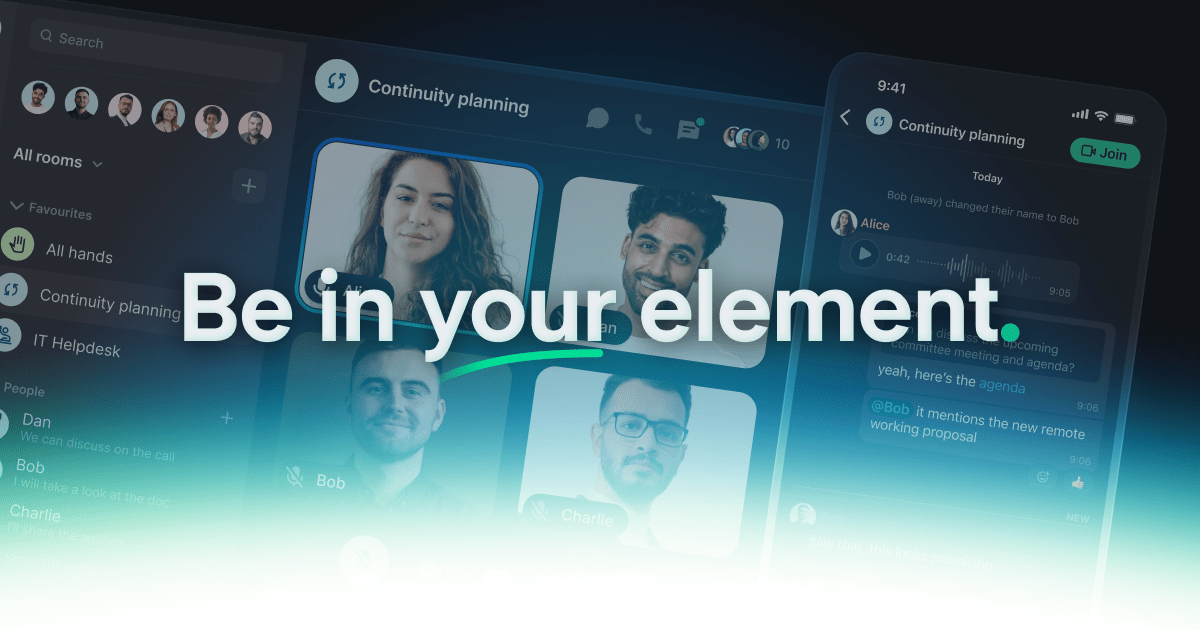
No. HansaChat is a proprietary hosted service and there is no self-hosted edition. The company does emphasise that it built and operates the chat core itself rather than wrapping another platform. If self-hosting is a hard requirement, Rocket.Chat or a Matrix deployment with Element are the European options to look at.
The imprint names Igor Tverdokhleb at Barkentinenstr. 20 in 23558 Lübeck, Germany, as the operator, with no incorporated company, commercial register entry or VAT number published. That is legally sufficient for a German imprint but worth weighing if you are moving a whole organisation onto the platform, since it means the vendor is effectively one person.
HansaChat is built as a European alternative to Slack: German team chat billed per workspace instead of per user, hosted on IONOS Cloud in the EU - a Slack alternative for teams that grew tired of per-seat pricing. It will not be a like-for-like feature match in every respect, so check the review above for where the two genuinely differ before switching.
HansaChat is one of several European Team Messaging tools we cover. It is most often compared with Slack, Microsoft Teams, Google Chat.