Every European enterprise search and AI work assistant software tool reviewed
Berlin, Germany
Business plan: Standard seat €25, Business Max seat €99, each per user per month before VAT, 20% lower when billed yearly / Workflows add-on from €539 per workspace per month / Enterprise on request
Seven days free, with €5 of model credit and no card needed
Best for: Staff-wide AI chat and agents at a stated seat price, hosted in the EU
Langdock combines a chat that works with several model providers, agents you configure yourself, workflow automation, integrations and an API in one workspace. The operator is Langdock GmbH of Berlin (Greifswalder Strasse 212, Amtsgericht Charlottenburg, HRB 254499).
Of the eleven tools in this section it is the one whose price list is easiest to read: a Standard seat at €25 and a Business Max seat at €99 per user per month before VAT, with a 20 percent reduction for yearly billing.
On hosting, the vendor writes that its shared SaaS runs through Microsoft Azure on servers in the EU, with the application and most configurable models staying there, and that customer content does not train models. It claims ISO 27001 and SOC 2 Type II. Large customers can ask for a dedicated tenant, bring-your-own-cloud from 2,000 seats or Kubernetes installation from 5,000 seats. Workflow runs cost extra, and the product leans towards chat and agents more than towards indexing old archives.
What Langdock does well
- Two seat tiers priced in euros on a public page
- A seven-day trial with a small credit and no card
- EU server location named, with a German contracting company
- Dedicated, own-cloud and on-premises routes exist for very large deployments
- Can use your own API keys with several model providers
Where Langdock falls short
- Runs on Azure, so a US cloud provider sits under the EU servers
- Not every model is guaranteed to run inside the EU
- Self-hosted options start only at thousands of seats
- Automation is sold as a separate add-on with run limits
Standout feature. Langdock is the one tool here that prints a standard seat, a heavy-use seat and an automation add-on on a single public price list.
Norway, Norway
Index €2,000 per month; Assistant from €20 per user per month (10 to 50 users), €15 per user per month (51 to 300 users), Enterprise from €3,990 per month (300+ users); ready-made agents from €300 per month
Demo on request
Best for: Organisations in Norway and the wider Nordic region that need an assistant grounded in their own documents and case systems
Ayfie calls itself a context layer between company data and every AI experience staff use. Connectors read the sources, the index tracks what is current and who may see it, and the assistant and agents answer with a link to the source. The legal entities named are Ayfie International AS (organisation number 917913773) and Ayfie AS, formerly VirtualWorks AS, and the site points to an Oslo Stock Exchange investor page.
The connector list names SharePoint, Exchange, Teams, Confluence, Jira, iManage, NetDocuments and file servers, plus Norwegian case systems such as ePhorte, P360 and Acos Websak, and the vendor says Active Directory rights are mirrored. Deployment ranges from secure SaaS to private cloud and full on-premises with local models. The index is billed separately from the per-user assistant, so the monthly total is higher than the seat figure suggests, and Norway sits outside the EU.
What Ayfie does well
- Index, assistant and agent prices are published
- SaaS, private cloud or on-premises
- Active Directory rights mirrored
- Choice between GPT, Claude and Gemini or local models
- ISO 27001 certified (stated)
Where Ayfie falls short
- Index is a separate monthly cost
- Connector list is strong on Norwegian systems
- Norway is EEA, not EU
- Smaller ecosystem than the large search platforms
Standout feature. Ayfie is the only tool here that bills the knowledge index and the assistant as two separate lines, which shows what the data layer costs by itself.
Munich, Germany
Pricing on request; free trial of iFinder available
Demo on request
Best for: Public administration, courts, banks and insurers that want search and AI answers installed inside their own infrastructure
IntraFind sells iFinder for search, iAssistant for chatting with company data and iHub for everyday AI tasks, all on one semantically enriched knowledge base with continuous permission checks. IntraFind Software AG sits at Landsberger Strasse 368 in Munich and is entered at the Munich District Court under HRB 134378. Search queries can be typed or spoken, and the vendor describes the platform as scaling to billions of documents.
The company has built enterprise search for more than twenty years and shows ISO/IEC 27001:2022 on its site. It lists 80+ connectors, hundreds of file formats, an Outlook add-in, a Confluence integration, and APIs and MCP for customers' own applications. Deployment can be on-premises, hybrid, sovereign cloud or managed service. Prices are not published, but a free iFinder trial is, which few quote-only vendors in this section match. References lean toward German-speaking public bodies and financial institutions.
What IntraFind does well
- Over 20 years of enterprise search work
- On-premises, hybrid or sovereign cloud
- Free trial of iFinder
- Continuous permission checks
- Voice and text queries
Where IntraFind falls short
- No published prices
- Fewer connectors than the largest platforms
- References lean toward DACH public sector
- Site only in German and English
Standout feature. IntraFind is the only quote-based search platform here that lets a technical team start on a free trial of the search product itself.
Linz, Austria
Pricing on request
Demo on request
Best for: Large organisations with many heterogeneous systems that need one permission-aware knowledge layer
Mindbreeze InSpire is an insight engine that connects business systems, keeps their permissions and feeds search, assistants and agents from one knowledge base. The European contact is Mindbreeze GmbH, Honauerstrasse 2 in Linz, entered under FN 262155y, and its imprint says Fabasoft AG, the Austrian software group, owns 85.5 percent. The product page claims 500+ data sources, and the documentation describes authorisation through graph structures with referenced access lists computed ahead of time.
A Model Context Protocol server lets AI agents use the indexed knowledge, and the same engine is packaged for contract management, RFP handling, quality management and process automation. A partner programme allows software vendors to embed it. The website also lists Mindbreeze Corp. in Chicago for North America and calls the headquarters 'Chicago and Linz', so confirm which entity signs. Prices are not published, deployments are normally projects, and cloud hosting regions were not stated.
What Mindbreeze does well
- 500+ data sources stated
- Existing permissions preserved
- MCP server for AI agents
- Ready applications for contracts and RFPs
- Majority owned by an Austrian software group
Where Mindbreeze falls short
- Pricing not published
- US subsidiary and Chicago headquarters mentioned
- Project-style implementation
- Cloud hosting regions not stated
Standout feature. Mindbreeze states the longest connector list in this section, 500+ sources, and hands the whole index to outside agents over MCP.
Paris, France
Founded 2016
Enterprise pricing / Contact for quote
Demo on request
Best for: European enterprises needing secure, compliant generative AI
LightOn built its place in this category on keeping everything inside the customer's perimeter. The Paris company, founded in 2016 as a spin-off from research at Ecole Polytechnique and Ecole Normale Superieure, sells the Paradigm platform for on-premises or private-cloud use, with retrieval-augmented generation over unstructured documents, fine-tuning on proprietary data and agents that choose between document search and web exploration. Its enterprise search and reasoning solution lets employees ask questions of internal repositories in natural language.
LightOn went public on Euronext Paris in 2024 and, according to the EP review, counts the Ile-de-France region, Safran, Groupama and the French Space Agency (CNES) among its customers, with partnerships at Orange Business and Hewlett Packard Enterprise.
The same review gives annual recurring revenue of 1.9 million euros at the end of December 2025, up 54 percent, and notes that hardware supply constraints slowed deployments. The company publishes retrieval models such as GTE-ModernColBERT on Hugging Face. Pricing is enterprise-only and starts with a demo.
What LightOn does well
- Full on-premises or private-cloud deployment keeps data in the customer's infrastructure
- Named public-sector and industry references, including Safran, Groupama and CNES
- RAG, fine-tuning and agents are built into one platform
- Retrieval models published openly on Hugging Face
- French company under EU law with GDPR compliance and SOC 2 Type 1
Where LightOn falls short
- Enterprise pricing only, reached through the sales team
- Small revenue base: 1.9 million euros ARR at the end of 2025
- Hardware supply constraints slowed 2025 deployments
- The largest foundation models are still produced by US firms
Standout feature. LightOn installs a complete generative AI platform, fine-tuned models included, on the customer's own servers and publishes its retrieval research.
Paris, France
Pricing on request
Demo on request
Best for: Large multinational organisations with complex systems, many languages and regulated data
Sinequa has sold enterprise search for over two decades and now positions the product as an agentic AI platform covering AI search, assistants, agents and advanced RAG, under the line 'Sinequa by ChapsVision'. The privacy policy names SINEQUA as a French simplified joint-stock company, registered in Paris under 442 599 213 at 24 rue de la Pepiniere. The company states that cloud, on-premises and hybrid deployment are available, tied to data residency rules in regulated industries.
Its own comparison page states 200+ native connectors, 350 document formats and natural language processing in 22+ languages, so a question in one language can surface documents in another. Typical sources named are SharePoint, Salesforce, SAP, ServiceNow, Jira and Confluence. Those figures come from the vendor and the page also ranks competitors. Sinequa is sold through demos and projects without published prices, and the buyer should confirm which entity signs the contract.
What Sinequa does well
- 200+ native connectors stated
- 22+ languages with cross-language retrieval
- Cloud, on-premises or hybrid
- Two decades of enterprise search
- French registered company
Where Sinequa falls short
- No published pricing
- Aimed at large organisations
- Figures come from its own marketing pages
- Part of a larger group (ChapsVision)
Standout feature. Sinequa is the tool here built around cross-language retrieval, backed by 22+ languages and 350 document formats.
Zurich, Switzerland
Pricing on request
Demo on request
Best for: Banks, insurers, government and other regulated organisations that cannot send data to third-party clouds
Squirro presents itself as a GenAI platform proven in regulated industries, with enterprise search and insights as one solution area. Core components are agentic AI, knowledge graphs, guardrails, a privacy layer and a classifier, with taxonomy and ontology management. Its website terms name Squirro AG, Zurich, as service provider, apply Swiss law and set Zurich as the exclusive place of jurisdiction, and the privacy policy gives Muhlebachstrasse 164 as the controller address.
The vendor says its complete platform can be delivered fully on-premises, from secure VPCs for global banks to air-gapped defence networks, rather than as a reduced offline version. Visitors can try the agent catalog without signing up or speaking to sales. Banking, insurance, government, healthcare, manufacturing and telecom are the listed industries. The privacy policy mentions several group entities, prices are not published, and efficiency claims on the site are the vendor's own figures.
What Squirro does well
- Full on-premises and air-gapped deployment
- Swiss law and Zurich jurisdiction in the website terms
- Agent demos without sign-up
- Knowledge graphs and guardrails included
- Industry focus on regulated sectors
Where Squirro falls short
- No published pricing
- Enterprise project rather than self-serve
- Group has several legal entities
- Efficiency claims are the vendor's own
Standout feature. Squirro is the one tool here that states it ships the whole platform, not a cut-down edition, into air-gapped networks.
Dresden, Germany
Pricing on request
Demo on request
Best for: German public administration, industry, banks and insurers that want search on their own infrastructure
Intergator is enterprise search from interface projects GmbH, Cottaer Strasse 2 in Dresden, registered at the Amtsgericht Dresden under HRB 8740. It comes in a Core edition for search and AI and AI+ editions that add generative answers, summarised with the sources visible. The AI edition connects document management systems, databases, file servers, wikis and e-mail and analyses content semantically.
Version 6.8, announced in September 2026, adds an agentic chat and improved hybrid search, and a Microsoft Teams plugin brings the assistant into chat. Packaged applications cover knowledge management, digital workplace, social intranet, website search and compliance monitoring. The vendor lists on-premises and private cloud and mentions no shared SaaS option, so the buyer carries more setup. Prices and connector counts are not published, and the site is oriented to the German-speaking market.
What Intergator does well
- Source-backed answers
- On-premises or private cloud
- Teams plugin
- Three editions from search to AI+
- Active release cadence (6.8 in September 2026)
Where Intergator falls short
- No published pricing
- No connector count stated
- No shared SaaS option mentioned
- Site oriented to DACH market
Standout feature. Intergator lets a buyer start with plain search in the Core edition and move to generated answers by changing edition, not product.
Paris, France
Founded 2022
From €24/user/mo (billed yearly)
Demo on request
Best for: Teams building custom AI workflows
Dust turns a company's existing tools into the knowledge base for custom AI agents. The Paris company was founded in 2022 by Gabriel Hubert, formerly at Stripe and Alan, and Stanislas Polu, formerly at OpenAI. Admins decide per agent which Slack channels, Drive directories, Notion pages or Confluence areas it may read, and agents can update Notion, HubSpot and Salesforce records as well as read them. Agents can call other agents, and Dust Apps cover custom actions.
Dust is model-agnostic across GPT-4, Claude, Gemini, Mistral and Grok, and holds SOC 2 Type II.
Its EP review cites Doctolib with more than 3,000 users, Alan and Wakam as customers, and reports 2,000-plus organisations and $7.3 million in annual recurring revenue by mid-2025, backed by $21.5 million from Sequoia Capital. Core platform code is published under the MIT licence. Seat pricing begins at $29 per month on the tool page. Enterprise customers add SSO/SAML, SCIM provisioning, audit logs and a choice of EU or US hosting.
What Dust does well
- Deep connections to Notion, Drive, Salesforce, HubSpot and more
- Admin control down to individual channels and folders
- Agents write back to connected systems, not just read
- Agent chaining and Dust Apps for custom workflows
- French company with EU data residency on every plan
Where Dust falls short
- €24 to €30 per seat per month adds up across a company
- Credit-based usage makes heavy agent work harder to budget
- Single-tenant deployment only on the Enterprise tier
- Underlying models are third-party, not European
Standout feature. Dust is the one tool here where non-engineers scope each agent to specific channels and folders and let it write back into Salesforce or HubSpot.
Amsterdam, Netherlands
Open Access plan free / Personal AI Assistant €20 a month on annual billing / Team and Enterprise quoted
Personal plan trial on request
Best for: Research and engineering groups that read papers and internal reports side by side
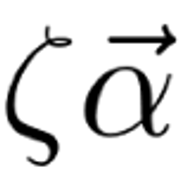
Zeta Alpha started as a search product for AI research literature and has grown into agentic search and retrieval-augmented generation for companies. A free Open Access plan covers open research, the Personal AI Assistant costs €20 a month with annual billing, a Team plan brings in material from Trello, Slack, Jira, Confluence, Google Drive and SharePoint, and an Enterprise plan adds custom agents working on private data.
The legal entity in the terms and privacy policy is Zeta Alpha Vector B.V., Science Park 608 in Amsterdam, under Dutch law. Enterprise customers can take a private tenant, with on-premises hosting possible, and the vendor lists 99.9 percent availability. What the pages do not say is just as useful: no cloud provider, region or security certificate is named, Team and Enterprise are priced by quote, and building your own agents is reserved for the top plan.
What Zeta Alpha does well
- A free plan and a €20 personal plan allow a test without a sales call
- Dutch private company named in the legal pages
- Private tenant with optional on-premises hosting
- One search across Slack, Jira, Confluence, Drive and SharePoint
Where Zeta Alpha falls short
- Hosting provider and region are not stated
- Team and Enterprise prices are available only by quote
- Custom agents require the Enterprise plan
- No certification is named on the pages read
Standout feature. Zeta Alpha is the one tool here that starts from a free search over open AI research before it adds the private-data agent layer.
Berlin, Germany
Founded 2018
Haystack framework free and open source (Apache 2.0) / Studio free tier (1 workspace, 100 pipeline hours) / Enterprise: custom pricing on request
Demo on request
Best for: Developers building governed RAG applications and AI agents
The Berlin company deepset maintains Haystack, a project under the Apache 2.0 licence with over 26,000 GitHub stars, used to assemble retrieval-augmented generation pipelines, agents and semantic search.
Unlike most vendors in this section, deepset sells building blocks rather than a finished assistant. The proprietary Haystack Enterprise Platform adds a visual pipeline builder, a test playground, guardrails and an audit trail with role-based permissions, and can run in the cloud or self-hosted. The vendor markets it as a platform for sovereign AI.
The company was founded in 2018 and holds SOC 2 Type II. Outside the United States the contracting party is the Berlin GmbH and German law applies, whereas a New York office serves American customers.
The free Studio tier is meant for trying things out: a single workspace and user, a hundred hours of pipeline time and fifty uploaded files. Enterprise buyers receive an individual offer, which a small team comparing against Dust's listed seat price will find harder to weigh. Teams without developers should treat Haystack as a component a partner builds with.
What deepset does well
- Haystack framework is free, open source and Apache 2.0
- More than 26,000 GitHub stars and active development
- Cloud or self-hosted deployment for data sovereignty
- RBAC, audit logs and guardrails built into the Enterprise Platform
- SOC 2 Type II certified
Where deepset falls short
- No published Enterprise pricing; every plan is quoted
- Free Studio tier is a prototype limit, not production-ready
- Requires developers; not a no-code bot builder like Rasa or Dust
- Also operates from New York, so not EU-only
Standout feature. deepset gives you an Apache 2.0 retrieval framework you can inspect and self-host, with a Berlin company supplying the governed platform on top.