
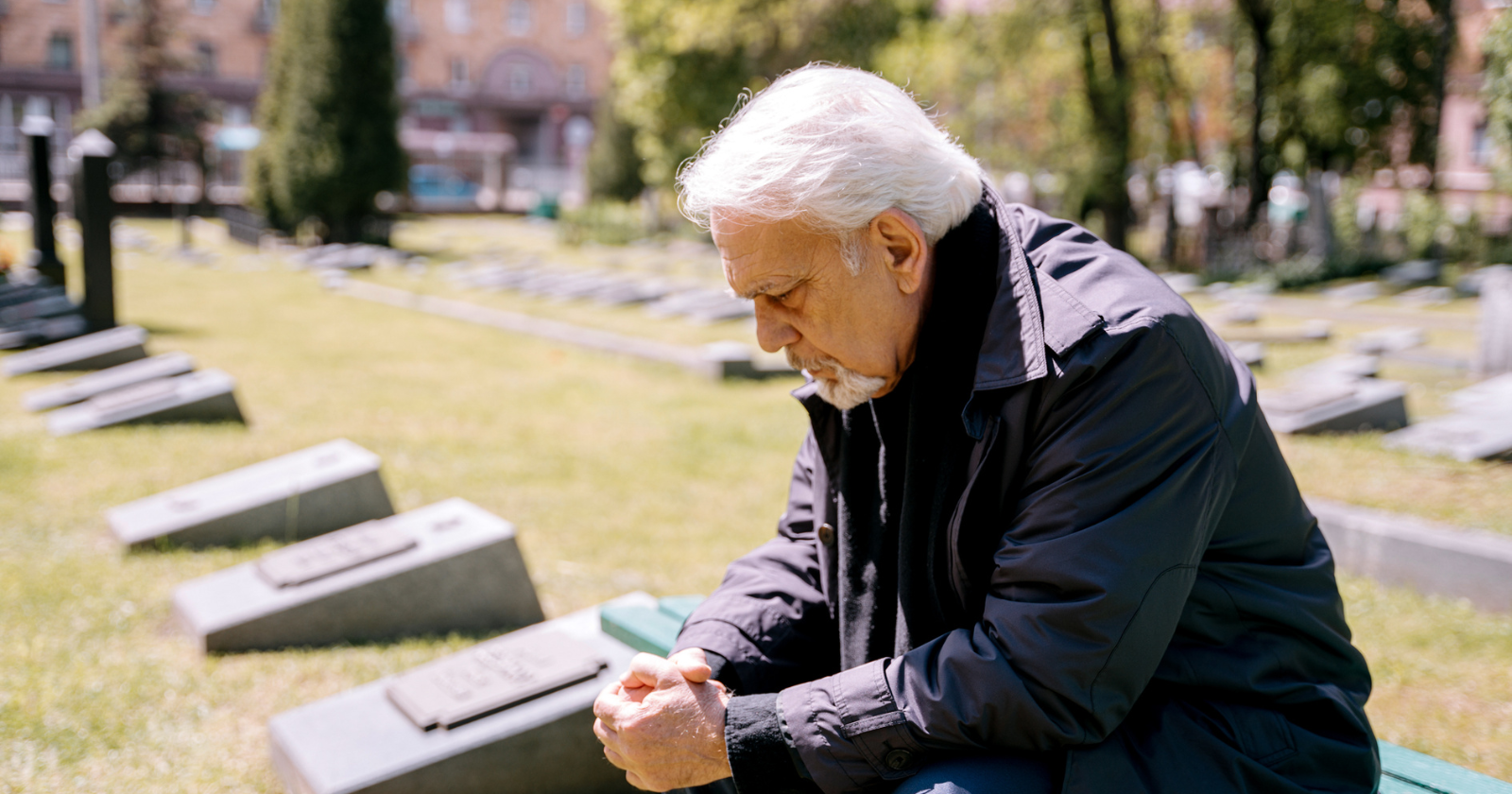
Why Our Assumptions About Grief Are Almost Always Wrong
The psychology of grief and resilience is one of the most misunderstood areas in modern behavioral science. Popular culture has built a remarkably specific — and remarkably misleading — picture of what grief is supposed to look like. Someone suffers a devastating loss. They cry. They fall apart. Slowly, painfully, they reassemble themselves.
Anyone who weeps publicly is assumed to be grieving properly. Anyone who seems fine is assumed to be suppressing something dangerous. But decades of rigorous psychological research tell a very different story — one that should fundamentally change how we think about loss, coping, and what it actually means to be resilient.
The assumption that visible distress equals deep feeling, and apparent composure equals denial or avoidance, is not just wrong. It is actively harmful. It causes people to doubt their own emotional responses, to feel pressure to perform grief in culturally sanctioned ways, and in some cases, to seek unnecessary clinical intervention for perfectly healthy coping patterns.
Understanding what psychology actually says about resilience after loss is not merely an academic exercise. For professionals navigating high-pressure environments — where teammates, colleagues, and team members face personal crises that affect performance and wellbeing — it carries significant practical weight.
The Five Stages of Grief Were Never Meant to Be a Script
The five-stage model of grief — denial, anger, bargaining, depression, acceptance — introduced by psychiatrist Elisabeth Kübler-Ross in her landmark 1969 work has shaped cultural understanding of loss more than almost any other psychological framework. The problem, as grief researchers have noted for decades, is that the model was based on observations of terminally ill patients processing their own impending death — not on bereaved survivors.
It was never designed as a universal sequence, and Kübler-Ross herself clarified this repeatedly before her death. Yet the model became a cultural script, and anyone who did not follow it in roughly the right order was assumed to be doing grief wrong.
Research published in the Journal of Consulting and Clinical Psychology has consistently shown that grief trajectories are far more varied than any stage model can capture. Some people experience intense acute distress followed by rapid stabilization. Others show delayed grief responses that emerge weeks or months after a loss.
And a substantial portion — research suggests somewhere between 35 and 65 percent of bereaved individuals, depending on the population studied — show what psychologists now call a resilience trajectory: relatively stable functioning before, during, and after the loss, with grief that is real but does not reach the threshold of clinical impairment.

The researcher most closely associated with mapping these trajectories is George Bonanno, a professor of clinical psychology at Columbia University, whose work on bereavement fundamentally reframed the field. His longitudinal studies — tracking individuals before and after loss — revealed that the resilient trajectory was not an outlier or a sign of pathology.
It was, in fact, the most common outcome. "Resilience is not the absence of feeling," Bonanno has argued in his research. "It is the ability to experience distress without being overwhelmed by it."
What Genuine Resilience After Loss Actually Looks Like
Here is the counterintuitive finding that psychology keeps arriving at: the person who appears totally fine after a devastating loss and the person who falls apart may be separated by far less than we imagine — and the truly resilient one is rarely the person we would instinctively identify as such.
According to research covered by Silicon Canals, popular culture systematically mistakes composure for suppression and distress for depth — a confusion that has measurable consequences for how bereaved individuals are treated by those around them.
Genuine resilience, as defined in contemporary grief psychology, is not stoicism. It is not the absence of emotion. It is also emphatically not the person who returns to work the next day, never cries, and insists they are fine when they are not.
True resilience involves what researchers call oscillation — the capacity to move between grief and engagement with daily life, to experience painful feelings without being locked inside them, and to maintain a basic sense of meaning and purpose even while mourning.
This is a dynamic, active process, not a passive absence of reaction.
Bonanno's longitudinal research, later expanded in collaboration with researchers at universities across the United States and Europe, identified four primary grief trajectories: resilience, recovery, chronic grief, and delayed grief. The resilience trajectory — characterized by minimal functional disruption — was consistently the most common, appearing in the majority of bereaved individuals across multiple studies.
The chronic grief trajectory, involving prolonged and severe disruption, affected a minority. Yet cultural narratives almost uniformly present the chronic trajectory as the norm and the resilient trajectory as the anomaly that requires explanation.
How to Tell the Difference Between Genuine Resilience and Suppression
The legitimate concern underlying cultural suspicion of composed grief is real: there is such a thing as emotional suppression, and it does carry costs. Research published in journals including Health Psychology and the Journal of Personality and Social Psychology has documented that habitual emotional suppression — the effortful inhibition of emotional expression — is associated with higher physiological stress responses, reduced immune function over time, and eventually worse mental health outcomes.
So the instinct to wonder whether someone's apparent composure conceals something is not entirely wrong.
The key distinction, however, is between suppression and what researchers call repressive coping versus genuine resilience. Suppression involves active effort to prevent emotional experience or expression. Resilience involves actually processing emotions — experiencing them — without being destabilized. Studies using physiological measures, including heart rate variability and cortisol tracking, have found that genuinely resilient grievers show lower physiological stress responses compared to suppressors, not higher ones.
In other words, their nervous systems tell a calmer story than their emotions would suggest, not because they are avoiding the emotion, but because they have processed it.
| Grief Response Type | External Appearance | Internal Experience | Long-Term Outcome |
|---|---|---|---|
| Resilient trajectory | Composed, functional | Genuine processing, real grief that does not overwhelm | Stable long-term functioning |
| Suppression | Composed, functional | Active inhibition of emotional experience | Elevated physiological stress, potential delayed impact |
| Recovery trajectory | Visible distress, gradual improvement | Significant disruption, gradual adaptation | Returns to baseline over months to years |
| Chronic grief | Prolonged visible distress | Persistent disruption beyond expected timeframe | May require clinical intervention |
| Delayed grief | Initially fine, later distress | Deferred processing triggered by secondary stressors | Variable; often resolves with support |
The practical implication is important: making assumptions about how someone is coping based on visible emotional expression is unreliable. Someone who is outwardly devastated may be doing exactly what their nervous system needs. Someone who is outwardly composed may be genuinely well. And, crucially, someone who is outwardly composed may also be suppressing in a way that will surface later. The external signal alone is insufficient to determine which is occurring.
What This Means for High-Pressure Professional Environments
For professionals in demanding fields — technology, law, medicine, policy, finance — these findings carry specific relevance. High-achieving environments often implicitly reward composed grief responses, not because those environments are emotionally sophisticated, but because they prioritize uninterrupted productivity. The result is that genuinely resilient professionals are rarely distinguished from those who are suppressing, and both may receive the same (often insufficient) institutional response.
Research from the field of occupational psychology, including work published by the American Psychological Association, suggests that workplaces that create psychological safety — environments where individuals feel they can acknowledge difficulty without career penalty — tend to produce better long-term outcomes for bereaved employees than workplaces that simply expect composure.
This is not about mandatory grief displays or performative empathy. It is about removing the pressure to perform a particular emotional state, which paradoxically allows genuine resilience to operate more effectively.

"The most dangerous thing we do to grieving people is tell them how they are supposed to feel. Resilience is not a performance. It is an internal process, and it looks different in every person who lives it."
— Based on themes consistent with contemporary bereavement researchThe dual process model of grief, developed by researchers Margaret Stroebe and Henk Schut and described in their foundational work in Death Studies, offers one of the most practically useful frameworks here. It describes grieving as an oscillation between loss-orientation (processing the loss itself) and restoration-orientation (attending to life changes and daily demands).
Healthy grieving, in this model, involves both — and critically, the restoration-oriented activities that look like "getting on with things" are not avoidance. They are a necessary and healthy component of adaptation.


