

Across Europe, cranes are going up over new data centres. Driven by surging demand for sovereign infrastructure, regulatory tailwinds and the compute hunger of AI, the continent’s home-grown cloud providers are expanding capacity at a pace not seen before. For buyers, the build-out is unambiguously good news.
Providers such as Hetzner, OVHcloud and Scaleway are adding facilities, regions and services, narrowing the gap with hyperscalers on availability while retaining their core advantage: infrastructure that is fully European, beyond the reach of foreign data-access laws.
What is fuelling the boom
Several currents are converging. Sovereignty requirements — like France’s public-sector cloud mandate — are creating guaranteed demand for European-hosted capacity. Enterprises are diversifying away from concentration risk on a single foreign provider. And AI workloads are driving an enormous appetite for compute, much of which organisations would prefer to run on infrastructure they can trust.
Together these forces give European providers the confidence and the capital to invest. Where the business case for expansion was once uncertain, it is now backed by visible, durable demand.
AI is reshaping data-centre design. New European facilities are being built with the dense power and cooling that GPU clusters require — positioning the continent to host its own AI, not just rent it abroad.
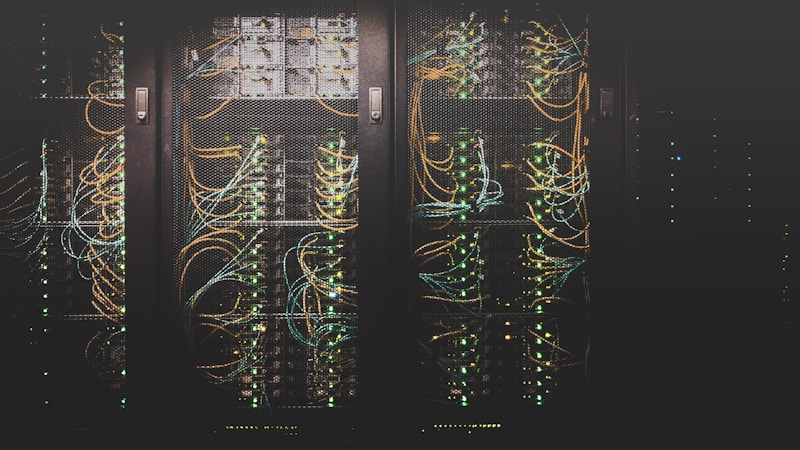
The providers leading the charge
Hetzner
The German provider has built a fierce following by offering excellent performance at prices that routinely undercut the hyperscalers. Its expansion adds capacity and locations while preserving the cost advantage and the German jurisdiction that make it a favourite for cost-conscious, privacy-minded buyers.
OVHcloud
Europe’s largest cloud provider operates its own data centres and even manufactures its own servers, giving it unusual control over its supply chain and economics. Its continued expansion strengthens a broad portfolio that spans bare metal, hosted private cloud and public cloud services, all under European governance.
Scaleway
The French provider has carved out a reputation for developer-friendly services and a strong stance on sustainability and AI. Its build-out includes infrastructure aimed squarely at AI workloads, reflecting the bet that European organisations will increasingly want to train and run models at home.
Sustainability as a differentiator
European providers are leaning into energy efficiency and renewable power, both because regulation demands it and because it is a genuine selling point. Advanced cooling, heat reuse and renewable sourcing are becoming standard features rather than marketing extras — and for sustainability-conscious buyers, they are a reason to choose European over the alternatives.
This focus also future-proofs the build-out against tightening environmental rules, ensuring the new capacity remains compliant and competitive as standards rise.
What it means for buyers
More capacity and more competition translate directly into benefits for customers. Availability improves, regional choice widens, prices stay keen, and the breadth of services grows. The historical objections to European cloud — not enough capacity, not enough features, not enough regions — are steadily falling away.
- More capacity: easier to find and scale European-hosted resources
- More choice: additional regions for performance and data residency
- Competitive pricing: healthy competition keeps costs down
- Broader services: portfolios expanding toward hyperscaler breadth
The remaining gaps
The build-out does not erase every difference overnight. Hyperscalers still offer a wider catalogue of niche managed services, and matching that breadth takes time. But for the workloads most organisations actually run — compute, storage, databases, containers, increasingly AI — European providers are fully competitive, and the gap on exotic services matters to fewer buyers than vendors like to suggest.
The energy and grid challenge
Data centres are, at bottom, machines for turning electricity into computation, and the boom raises hard questions about power. AI workloads in particular are extraordinarily energy-hungry, and the new generation of GPU-dense facilities draws far more power per rack than the data centres of a decade ago. Connecting that demand to the grid, in regions where capacity is already stretched, is becoming a binding constraint on where and how fast providers can build.
European providers are responding on several fronts. They are siting facilities where renewable power and grid capacity are abundant — the Nordics, with their hydroelectric power and cool climate, are especially attractive. They are investing in efficiency, advanced cooling and heat reuse, sometimes feeding waste heat into district heating systems. And they are working with grid operators to plan capacity rather than simply demanding it.
This focus is not merely virtuous; it is strategic. Tightening environmental regulation means that inefficient, fossil-powered capacity risks becoming a stranded liability, while efficient, renewable-powered facilities are future-proof. European providers’ early lean into sustainability positions them well for a regulatory environment that will only grow stricter.
Pushing compute to the edge
Not all of the build-out is about giant central facilities. A parallel trend is the expansion of edge and regional capacity — smaller data centres closer to users that reduce latency and keep data within specific localities. For applications that demand fast response times or strict regional data residency, edge capacity is as important as raw central scale.
This regional expansion also deepens sovereignty. The more European locations a provider operates, the more precisely customers can control where their data lives — choosing a specific country to satisfy a regulatory requirement or a contractual promise. As the map of European data centres fills in, ‘keep my data in this exact jurisdiction’ shifts from an aspiration to a simple configuration choice.
Conclusion
Europe’s data-centre boom is the physical manifestation of the sovereignty movement. Demand for trusted, EU-controlled infrastructure has reached the point where providers can invest with confidence, and that investment is producing more capacity, more choice and better value for buyers.
For any organisation weighing a move to European cloud, the timing has never been better. The infrastructure is being built out precisely to meet your needs — and choosing it has never been easier or more competitive.
Browse our complete directory of European services to find privacy-first, GDPR-compliant alternatives that keep your data in Europe.