Why Buying Too Much Food for Family Visits Is Not a Logistics Problem
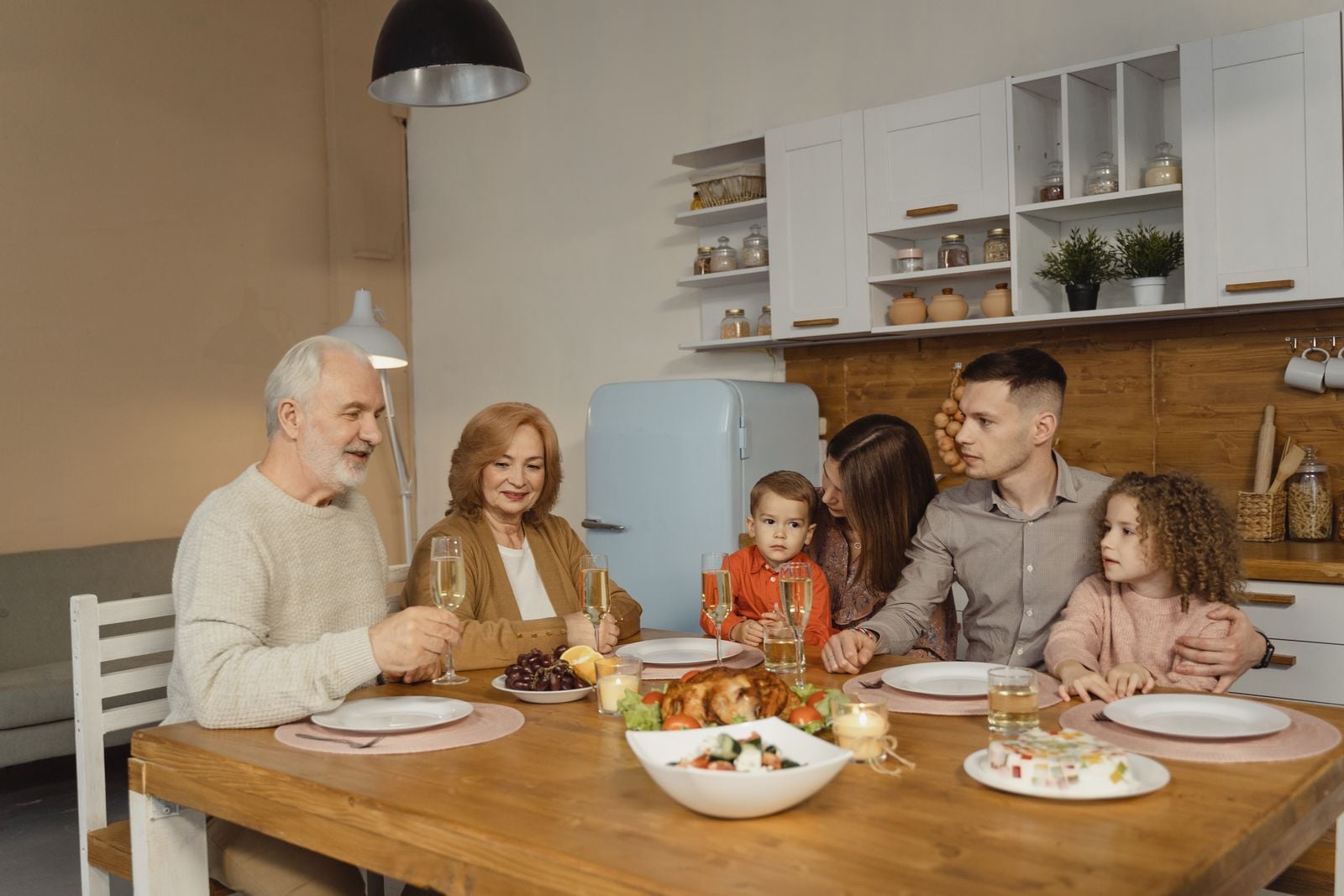
The extra loaf of bread. The second lasagna cooling on the counter. Three types of dessert for four guests. If you recognise this scene, you are not alone — and the pattern of buying too much food when family visits is far more common, and far more emotionally layered, than most people realise. For millions of adults, the impulse to overprepare the table when loved ones walk through the door has nothing to do with miscalculation or anxiety. It is a form of inherited speech — a grammar of care learned in a childhood kitchen where love arrived on a plate long before it was ever said out loud.
Most people assume the pattern is logistical. Fix the shopping list. Show more discipline at the supermarket. Make a firmer plan. But as research into intergenerational emotional transmission consistently shows, behaviours rooted in childhood emotional coding rarely respond to logistical corrections — because they were never logistical to begin with. They are emotional inheritance dressed up as a grocery run, and understanding them requires looking backward, not at the shopping trolley.
The Kitchen as a First Emotional Language
In households where feelings were not openly discussed — because the adults lacked the vocabulary, because expressing emotion out loud felt unsafe, or because the culture simply did not operate that way — food carried a weight that words could not. A full fridge meant you were welcome. A second helping meant you were seen. A packed leftover container pressed into your hands at the front door meant you were still loved on the drive home.
Children absorb these emotional codes early and deeply. Long before they can articulate what is happening around them, they learn that abundance on the table is a signal of safety and belonging, while scarcity signals something is wrong. Decades later, when their own family walks through the door, the body remembers the code before the conscious mind does. The hand reaches for a third packet of biscuits at the checkout without a clear reason. The impulse feels like instinct. In a sense, it is.
This pattern is not limited to any one culture, though it appears with particular intensity in post-war households, immigrant families, and working households shaped by periods of genuine scarcity. In all of these contexts, feeding people served a dual function: it was both a practical act and a proof of arrival — proof that the family had made it, that there was enough, that love was present even when no one had the words to say so.
"Food has always been one of the most universal forms of non-verbal communication within families. When people cannot or do not say 'I love you,' they feed you — and that message is received just as clearly by a child."
— Dr. Susan Forward, author of Toxic Parents, on emotional inheritance in family systemsHow Emotional Patterns Transmit Across Generations Without Anyone Noticing
Psychologists have written extensively about how children absorb their parents' emotional grammar and then repeat it — often without meaning to, and often in spite of consciously wanting to do things differently. Research published in Psychology Today on the intergenerational transmission of parenting behaviour describes how patterns from childhood households become automatic adult behaviours, even in people who have done significant personal work to break the cycle. The behaviour does not need to be dramatic to transmit. It simply needs to be repeated, and it needs to be associated with something emotionally significant.
Setting a full table falls squarely inside that transmission mechanism. It is small, ritualised, and almost invisible as a lesson — which is precisely why it sticks. The child who watched a grandmother spend three days cooking before a Sunday lunch did not sit through a lecture on how to express love. They watched. They ate. They understood. And decades later, standing in a supermarket before a family gathering, they fill the trolley with the fluency of someone completing a sentence they have been practising their entire lives.
Importantly, the transmission is not just behavioural. It is also neurological. Research referenced by Silicon Canals highlights how financial scarcity rewires the nervous system in ways that persist long after material circumstances improve. The body keeps a memory that the bank account does not. Adults who grew up watching parents stretch a limited budget to feed guests often carry a physical unease around the idea of running out — even when running out is mathematically impossible. Two extra bags of groceries temporarily settle that unease. Then the visit ends, the leftovers go into the freezer, and the cycle waits quietly for the next family gathering.
Acts of Service and the Love Language Nobody Named at the Kitchen Table
The framework of love languages, popularised by counsellor Gary Chapman in 1992, gave a vocabulary to something families had been doing wordlessly for generations. Acts of service — one of the five languages Chapman identified — describes precisely what a fully stocked table before a family visit tends to be. The idea is straightforward: some people primarily give and receive love through practical actions rather than words. That framework applies well beyond romantic relationships and extends naturally into family dynamics.
Taylor Orlandoni, who teaches personality and sexuality at New York University, has noted that someone whose primary love language is acts of service reads practical actions as signals of genuine care — as evidence of being backed up and thought about. A stocked fridge is one such signal. So is the extra pack of biscuits nobody asked for, or the third dessert option waiting on the counter. The person doing the buying often cannot fully explain the compulsion. They only know, with a certainty that bypasses rational analysis, that arriving with less than enough feels intolerable.
| Love Language | How It Appears in Family Food Behaviour | Common Misreading by Others |
|---|---|---|
| Acts of Service | Overbuying, preparing extra dishes, packing leftovers | Anxiety, waste, performance |
| Words of Affirmation | Complimenting the meal, acknowledging effort out loud | Flattery, insincerity |
| Quality Time | Long meals, lingering at the table, shared cooking | Inefficiency, lack of boundaries |
| Gift Giving | Bringing specialty ingredients, arriving with food gifts | Showing off, unnecessary spending |
| Physical Touch | Serving food directly, placing dishes personally in front of guests | Hovering, intrusiveness |
Where the Fear of "Not Enough" Actually Comes From
For many people who overbuy, the intolerance of scarcity has roots older than any relationship they are currently hosting. It reaches back into households shaped by real material deprivation. It extends into immigrant kitchens where putting an abundant table before guests was proof that the family had made it in a new country. It lives in homes where a parent expressed love exclusively through food — where warmth arrived only when the table was set, and never otherwise.
Ask someone who consistently overbuys what they are actually afraid of, and you will rarely get a clean answer. Not because they are evasive, but because the fear predates their capacity to articulate it. It is not really about running out of bread or cheese. It is about being caught unprepared to care for someone. It is about the specific, textured shame of a guest asking for seconds when there are none, of a child looking at an empty bowl, of a parent's face — remembered from decades ago — when there simply was not quite enough to go around.
The overbuyer is guarding against a scene they may have witnessed only once, at eight years old, at a table that no longer exists. The response is disproportionate to the present-day risk because it was calibrated to a past-day reality. That mismatch is not irrationality — it is the nervous system doing exactly what it was trained to do.

Why Partners and Family Members So Often Misread the Gesture
A partner who grew up in a different emotional dialect will frequently interpret overbuying as anxiety, wastefulness, or an unnecessary performance. They might tease. They might push back. They might, gently or otherwise, suggest a shorter list next time. What they typically miss is that they are critiquing a love letter written in a language they do not read.
This is one of the quieter sources of friction in couples with different love languages. A gesture only lands as love if the recipient recognises it as love. Otherwise, it lands as excess, as hovering, as misplaced effort. And being told to buy less can register for the overbuyer as being told to love less — not because that reading is rational, but because the wiring underneath does not run on rationality. It runs on decades of encoded association between fullness and safety, between abundance and belonging.
According to research highlighted in Psychology Today's coverage of love language theory, mismatched love languages are among the most common sources of unspoken conflict in long-term relationships precisely because neither party is wrong — they are simply operating from incompatible emotional grammars inherited from different households. The solution is rarely behavioural change alone. It is translation: helping the person who does not share the language understand what the gesture is actually encoding.
What Happens When the Pattern Gets Named and Recognised
Naming the inheritance does not dissolve it. Most people who identify with this pattern do not particularly want to stop. What they want is to stop feeling ashamed of it, and they want the people around them to see what the gesture is actually doing — to understand that the third dessert is not poor judgment but a declaration that could not find words.
Something meaningful shifts when the overbuying gets translated. The partner who used to sigh at the second bag of oranges begins to notice: this is how she was loved. This is how she loves. The adult child who used to roll their eyes at their mother's insistence on three times as much food as anyone could eat begins to see the extra pies for what they actually are — a person who grew up in a house where saying "I love you" was not done, still finding a way to say it.
As explored in Originally reported by Silicon Canals. Summarised and curated by European Purpose.