The Six Women Who Programmed the World's First Computer — Without a Manual
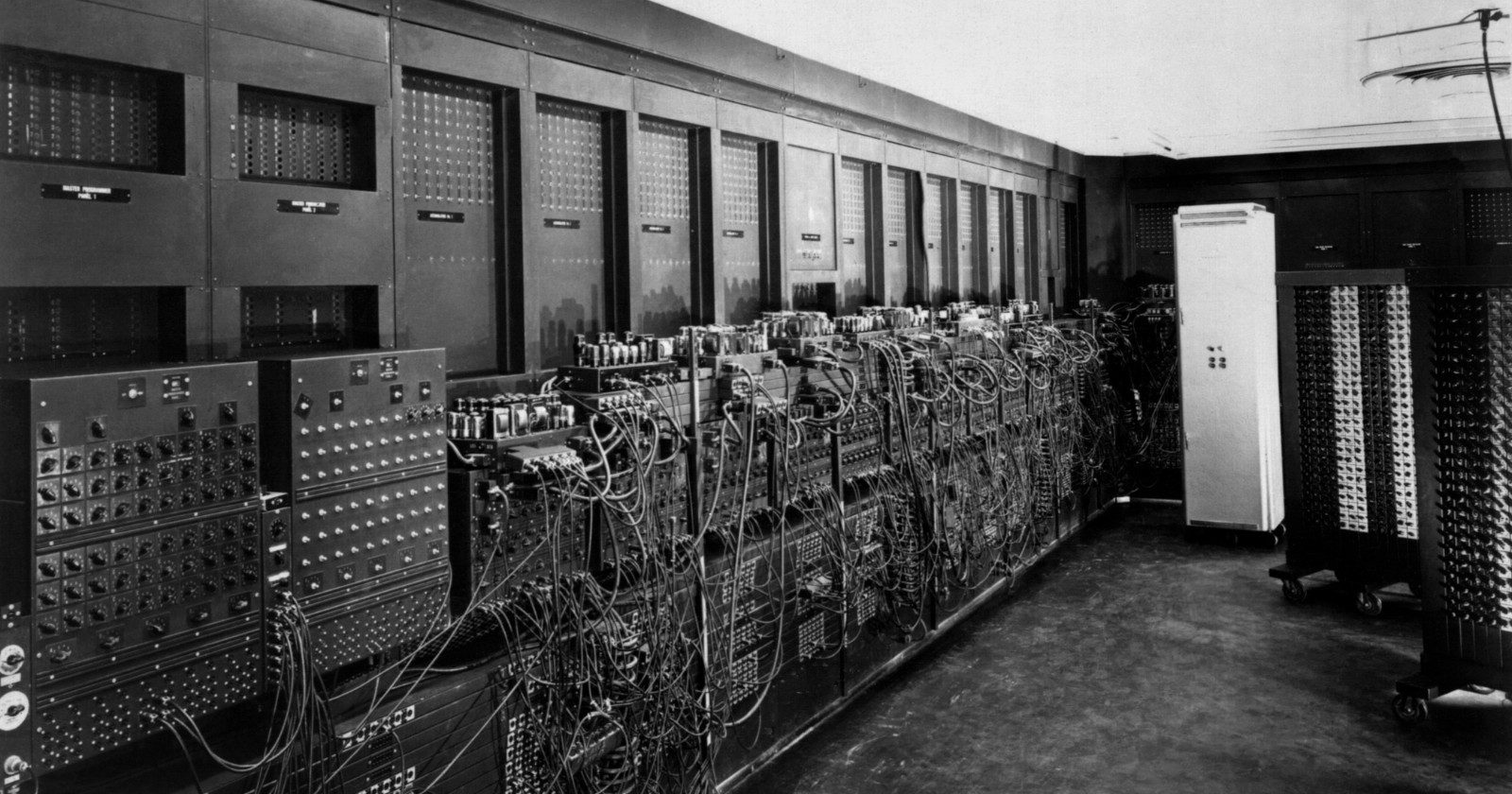
In 1946, at the Moore School of Engineering in Philadelphia, six women were handed a stack of wiring diagrams for a machine called ENIAC — the Electronic Numerical Integrator and Computer — and told to make it work. There were no programming manuals, no tutorials, no prior art to consult. The very concept of "programming" a general-purpose electronic computer had never existed before, because no such machine had ever existed before. Betty Snyder, Frances Bilas, Jean Jennings, Kathleen McNulty, Marlyn Wescoff, and Ruth Lichterman were, in the most literal sense, inventing software engineering as they went.
The ballistic trajectory calculation they ultimately got running on ENIAC became the first working software program ever demonstrated on a general-purpose electronic computer. It was a milestone that would define the entire trajectory of modern computing, the internet, digital privacy, cybersecurity, and every line of open-source code written since. Yet when ENIAC was unveiled to the press and the public, the six women who made it function were absent from the official announcement. Their names were left off the press release. The engineers who built the hardware received the credit. The women who gave it its purpose were, for decades, largely written out of history.
Who Were the ENIAC Women Programmers and What Did They Actually Do?
The six women selected to program ENIAC were not chosen at random. They had been working as human "computers" — a job title that meant exactly what it sounds like — calculating ballistic firing tables for the US Army by hand, using mechanical desk calculators. This was painstaking, precise, and intellectually demanding work. When the Army decided to automate those calculations using ENIAC, these women were the most qualified people available to translate the mathematical logic into machine instructions. They were not secretaries drafted into a technical role, as some early accounts suggested; they were trained mathematicians and engineers in all but formal title.
Betty Snyder, in particular, was known among her colleagues for an almost preternatural ability to debug problems. According to historical accounts documented by the Smithsonian Magazine, Snyder is credited with inventing the concept of the breakpoint — a debugging technique still used in every modern integrated development environment (IDE) today. When a program halted unexpectedly, Snyder's method of isolating where in the logic the fault occurred laid the conceptual groundwork for the debugging workflows that software developers rely on in 2024.
Frances Bilas and Jean Jennings were known for their ability to physically reconfigure ENIAC's function tables and switches — a process that amounted to wiring the program directly into the machine. There was no stored-program architecture yet; each new calculation required physically rewiring portions of the 30-tonne, room-filling system. The women studied the wiring diagrams, reverse-engineered the machine's logic, and built a working mental model of ENIAC's architecture before a single calculation could be attempted.

"The ENIAC programmers didn't just write history's first software — they invented the entire conceptual vocabulary of programming under conditions that would be considered impossible by modern standards."
— Historian of computing, reflecting on the ENIAC legacyHow the ENIAC Women Were Erased From Computing History
The pattern of erasure that followed the ENIAC demonstration is not simply a historical curiosity — it is a structural case study in how institutional credit systems work, and how they fail. When ENIAC was demonstrated publicly, the women who had spent months programming it were present at the event, but were introduced to guests as "refrigerator ladies" — a term implying they were promotional models rather than engineers. The press release credited the male hardware engineers. The academic papers that followed focused on architecture, not software.
It was not until decades later, largely thanks to the research efforts of journalist and author Kathy Kleiman — whose work is documented in the ENIAC Programmers Project — that the full story began to surface. Kleiman spent years tracking down surviving members of the team, collecting oral histories, and fighting to have the women formally recognised. In 1997, all six were inducted into the Women in Technology International Hall of Fame. Jean Jennings Bartik — one of the six — spent much of her later life publicly advocating for recognition of the team's contribution before her death.
The story gained wider public attention after the documentary Top Secret Rosies and later coverage in Wired and other major technology publications. Wired's retrospective on Betty Snyder Holberton highlighted not only her ENIAC work but her subsequent contributions to early computing standards, including co-designing the first sort-merge generator and contributing to the development of COBOL and FORTRAN standards — programming languages whose descendants still run significant portions of global banking and government infrastructure today.
Why the ENIAC Women Programmers Still Matter for Today's Developers and Tech Industry
For software developers, IT architects, and technology policy professionals reading this in the context of modern digital infrastructure, the ENIAC story is not merely a piece of feel-good history. It is a direct line of intellectual inheritance. The debugging techniques pioneered by Betty Snyder are present in every IDE from VS Code to IntelliJ. The logic decomposition methods the ENIAC women developed to break ballistic trajectory calculations into machine-executable steps are the conceptual ancestors of modern algorithm design and modular programming.
The story also resonates sharply in the context of the European technology landscape, where debates around digital sovereignty, open-source infrastructure, and inclusive tech development are intensifying. The European Commission's push for a more autonomous, values-driven technology sector — including initiatives around the European Open Source Strategy and AI regulation under the EU AI Act — implicitly requires an understanding of who builds technology, who gets credit, and whose contributions shape the systems that eventually govern critical infrastructure.
| ENIAC Programmer | Later Contribution to Computing | Recognised? |
|---|---|---|
| Betty Snyder Holberton | Co-designed first sort-merge generator; contributed to COBOL and FORTRAN standards | 1997, WITI Hall of Fame |
| Jean Jennings Bartik | Helped convert ENIAC to stored-program architecture; worked on BINAC and UNIVAC | 1997, WITI Hall of Fame |
| Frances Bilas Spence | Key role in initial ENIAC demonstration and ballistic trajectory program | 1997, WITI Hall of Fame |
| Kathleen McNulty Mauchly Antonelli | Later worked on UNIVAC; married ENIAC co-inventor John Mauchly | 1997, WITI Hall of Fame |
| Marlyn Wescoff Meltzer | Contributed to ENIAC programming and ballistic calculations | 1997, WITI Hall of Fame |
| Ruth Lichterman Teitelbaum | Later trained other programmers on ENIAC operation | 1997, WITI Hall of Fame |
The open-source movement, which underpins much of today's European cloud infrastructure, cybersecurity tooling, and privacy-preserving technology, has always relied on the principle that contributions should be attributed, audited, and built upon. Git commits, contributor logs, and open licensing are all, in some philosophical sense, corrections to the kind of institutional erasure that left the ENIAC women out of the press release in 1946. The lesson is embedded in the architecture of modern collaborative software development.
From ENIAC to the EU AI Act: Women in Technology and the Representation Gap That Persists
The representation gap that the ENIAC story illustrates has not disappeared. According to research published by the McKinsey Women in the Workplace report, women remain significantly underrepresented in senior technical roles across the technology sector globally. In Europe specifically, data from the European Institute for Gender Equality indicates that women hold fewer than 20% of ICT specialist roles across EU member states — a figure that has improved only marginally over the past decade despite policy interventions.
This matters directly for the policy professionals and IT decision-makers who are shaping Europe's digital future. The EU AI Act, GDPR enforcement frameworks, and digital sovereignty initiatives are all systems that will be designed, implemented, and audited by people. If those people do not represent the full breadth of the societies they serve, the systems they build will carry those blind spots into critical infrastructure — into the algorithms that process personal data, into the privacy tools that protect citizens, into the cloud architectures that store sensitive government and enterprise information.

The broader significance of the ENIAC programmers story, then, is not merely biographical. It is structural. When qualified contributors are systematically excluded from credit — whether in 1946 or in the architecture reviews and patent filings of the present — the institutions that rely on those contributions lose institutional memory, lose the ability to build on prior art accurately, and lose the trust of the communities they serve. In an era when digital trust is itself a policy priority across Europe, that is not a trivial concern.
There are encouraging signs. Initiatives like the UN Women STEM programme, the European Commission's Digital Education Action Plan, and a growing number of open-source communities with explicit contributor equity policies are attempting to address structural barriers. The story of Betty Snyder and her
Originally reported by Silicon Canals. Summarised and curated by European Purpose.