The Richest City in Asia Has a Burnout Problem Nobody Puts on the Dashboard
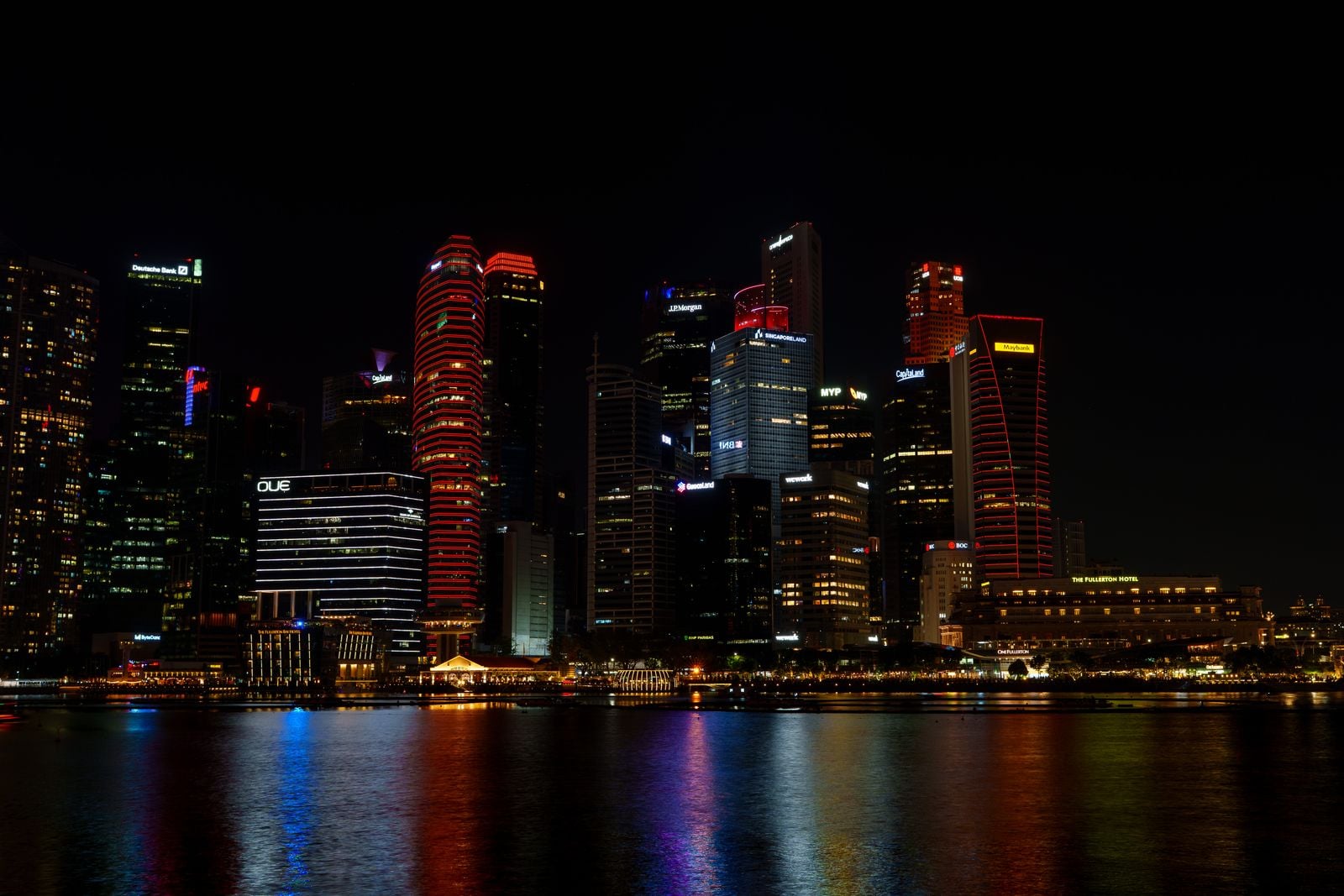
Singapore has achieved something that most economists would have considered impossible for a city-state with no natural resources: one in six households now holds at least one million US dollars in investable assets, the highest millionaire density of any city in Asia. GDP per capita sits among the highest in the world. The transit system arrives on the minute. Family offices have multiplied rapidly in recent years. By almost every conventional measure the country has optimised, it is winning. And yet, according to Silicon Canals, it also ranks among the top three cities in Asia for reported workplace burnout, with a majority of Singaporean workers describing themselves as burned out. The wealth and mental health data are moving in opposite directions, and the gap between them is the story the skyline hides.
For technologists, policy professionals, and entrepreneurs who spend their working lives inside high-performance systems — building products, managing infrastructure, processing data at scale — Singapore's predicament is not an exotic outlier. It is a mirror. The same optimisation logic that produces high-density millionaire cities also produces high-density burnout in engineering teams, compliance departments, and startup ecosystems from Amsterdam to Austin. The metrics being tracked and the metrics that actually matter are rarely the same list.
How Income and Mental Health Actually Relate — And Where the Curve Flattens
The relationship between money and mental health is real and significant — but only up to a point. A June 2025 Forbes analysis of population health data found that people in the lowest income brackets suffer anxiety, depression, and other mental health conditions at rates 1.5 to 3 times higher than those in the highest brackets. A study in Chelsea, Massachusetts cited in the same analysis found that low-income recipients of a US$400 monthly stipend had 27 per cent fewer emergency room visits over nine months compared with a control group who received nothing. Money at the bottom of the income distribution buys something concrete: fewer nights lying awake about rent, fewer cascading financial crises, less chronic stress from scarcity.
But the curve flattens hard. A longitudinal study of 1,538 Dutch adults published in SSM Mental Health in 2025 and reported by Healio tracked mental health trajectories across five and a half years before and after retirement. Researchers led by Xuefei Li of the University of Edinburgh found that income was the single largest driver of mental health outcomes in the peri-retirement window — but the outcomes split sharply by bracket. Low-income retirees saw a brief spike of relief just before retirement, followed by decline. Middle-income retirees saw sustained gains. High-income retirees showed almost no movement in either direction — their baseline was already stable, and more money did not shift it further. Translated to Singapore: the marginal psychological return on a second million is a fraction of what the first delivered, and the return on the tenth is close to zero.
A 1978 study of major lottery winners — one of the foundational papers in hedonic adaptation research — found that within about a year, winners rated ordinary daily pleasures measurably lower than people who had never won anything. The mechanism is straightforward: once the reference point shifts to a private jet, an economy seat registers as punishment. Once the reference point is a Sentosa Cove bungalow, a standard apartment feels like failure — even if that apartment represents a level of comfort unavailable to most of the world's population. The happiness set-point recalibrates, as researchers writing in Psychology Today have described, within months of a raise, a promotion, or a new property acquisition. The dopamine spike fades. The target moves further out. The cycle restarts.
Why Physical Density Amplifies the Comparison Trap
Singapore covers roughly 728 square kilometres — approximately the size of New York City's five boroughs. In a geography that compact, the millionaire next door is not a statistical abstraction. The Ferrari at the school pickup is the same school pickup you're attending. The condominium listing that just cleared S$5,000 per square foot is in your postcode. When the peer reference group is not just culturally visible but geographically inescapable, the psychological pressure to match it compounds continuously.
Teenagers experience a version of the same effect through social media. A 2025 study in Nature Human Behaviour, covered by News-Medical, found that adolescents with pre-existing anxiety or depression were disproportionately harmed by social media use compared with healthy peers. The mechanism is identical: an artificially compressed reference group producing a distorted sense of where the baseline sits. In Singapore's case, the reference group is not artificially compressed — it is geographically compressed. There is no feed to close, no algorithm to switch off. The comparison is ambient and architectural.
For the technology and policy professionals reading this, the parallel is direct. In any high-performance cluster — whether it is a startup ecosystem, a compliance team inside a major financial institution, or a cloud infrastructure group — the peer reference group is similarly dense. Compensation bands are searchable. LinkedIn makes every promotion public. Equity outcomes from acquisitions circulate on Slack. The geography is digital rather than physical, but the hedonic mechanism is identical.
"Wealth consists not in having great possessions, but in having few wants."
— Epictetus, Stoic philosopherWhat Happens When Economies Optimise for Output and Ignore Wellbeing Metrics
A 2026 Forbes Nonprofit Council analysis of the mental health economy argued that treating workplace wellbeing as a personal problem — separate from productivity and organisational outcomes — has stopped making operational sense. The World Health Organization estimates that depression and anxiety cost the global economy significant productivity losses each year. The concept of "mental wealth" — treating cognitive and emotional capital as the actual foundation any economy or technology organisation runs on — reframes the equation: erode the foundation, and the output numbers eventually follow.
Singapore has, quietly, been running this experiment in reverse for two decades. Optimise for output. Let the wellbeing indicator drift. See what breaks. Nationwide mental health studies have found a significant portion of residents experiencing mental health conditions across their lifetimes, with particularly sharp rises among younger adults — the same cohort responsible for maintaining the country's productivity miracle. Working adults in Singapore report anxiety and depression symptoms at rates comparable to countries with a fraction of its GDP. The people at the top of the wealth pyramid are not insulated. They are frequently the ones running fastest.
| Income Bracket | Mental Health Trajectory Post-Retirement | Marginal Gain from Additional Income |
|---|---|---|
| Low income | Brief relief spike, then decline | High — scarcity relief is real and measurable |
| Middle income | Sustained gains | Moderate — stability compounds positively |
| High income | Almost no movement in either direction | Near zero — baseline already stable |
Singapore publishes some of the most detailed economic dashboards on the planet — GDP growth, housing indices, foreign reserves, core inflation, all updated continuously. What it does not publish, and what most countries and organisations do not publish, is a real-time indicator of whether the population is actually functioning well. Mental health studies arrive every several years. Workplace burnout surveys are run by private firms with inconsistent methodologies. Suicide statistics — Singapore recorded its highest number since 2000 in recent years — arrive with a lag and are treated as a public health footnote rather than a headline economic indicator. If the millionaire-density figure moved the wrong way for a single quarter, it would be front-page news. When the mental health figure trends the wrong way for a decade, it becomes a policy paper.
The Dashboard Problem: Why High-Performance Teams Measure the Wrong Things

The Singapore case is structurally familiar to anyone who has worked inside a high-performance technology organisation. Engineering teams track deployment frequency, mean time to recovery, and sprint velocity. Security teams track vulnerability counts, patch latency, and incident response times. Compliance teams track audit findings and remediation SLAs. These are legitimate metrics. They measure real things. What most technology organisations do not track with equivalent rigour is whether the humans running those systems have a sustainable capacity to keep running them.
The analogy to digital infrastructure is precise: a system optimised exclusively for throughput, without monitoring for thermal load or memory pressure, will eventually degrade in ways that the throughput metric does not predict and cannot explain. Burnout in a senior engineer or a compliance lead is the human equivalent of unmonitored memory pressure — invisible on the primary dashboard until the process crashes. By the time it shows up in attrition data or a missed deadline, the degradation has been running for months.
Organisations operating in environments shaped by frameworks like GDPR or the EU AI Act are already required to think about systemic risk differently from pure-output models. Data protection impact assessments, for instance, force a structured consideration of second-order harms that would not appear on a standard business metrics dashboard. The same logic applied to workforce sustainability would produce different management decisions — not softer ones, but more accurately calibrated ones.


