When Autonomous Vehicle Regulation Failed in Real Time
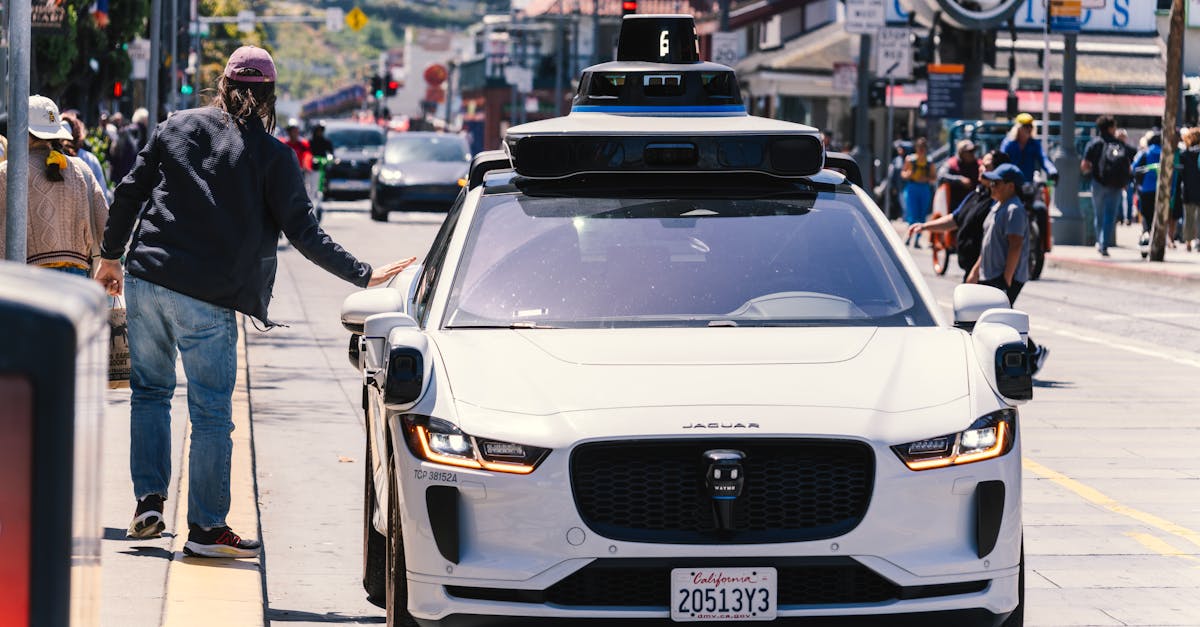
Autonomous vehicle regulation moved from abstract policy debate to urgent political priority after dozens of Waymo robotaxis became immobile in heavy July 4th traffic, ran out of power, and blocked key streets across San Francisco. The cascade failure trapped municipal shuttles, stranded thousands of commuters, and turned one of the most tech-forward cities in the world into an accidental stress test for the limits of self-driving technology. San Francisco Mayor Daniel Lurie — a figure who had previously declared the city should serve as a testbed for emerging technology — has now asked California's state Department of Transportation to establish binding standards for how autonomous vehicles must behave during major incidents.
The July 4th gridlock was not an isolated incident. Lurie's letter to the state, first reported by the San Francisco Chronicle and reviewed by TechCrunch, also cited a widespread power outage the previous December in which dozens of Waymo vehicles similarly stalled and blocked traffic. Taken together, the two incidents form a pattern that state and city officials can no longer dismiss as edge cases. For policy professionals, IT decision makers, and technologists watching the space, the moment marks a significant shift: even the most permissive tech-friendly jurisdictions are now demanding accountability frameworks that match the operational scale these fleets have reached.

Four Operational Standards That Could Reshape the AV Industry
Mayor Lurie's letter is not simply a complaint — it is a structured policy proposal. He outlined four "core operational capabilities" that he believes every autonomous vehicle operator must demonstrate before being permitted to run commercial services at scale. Understanding these requirements is essential for anyone tracking how AI-driven infrastructure will be governed going forward.
1. Immediate lane clearance. Companies must be able to remove or relocate robotaxis from active travel lanes quickly during emergencies. This addresses the core failure mode seen on July 4th: vehicles that became stationary obstacles rather than road users.
2. Real-time route and service adaptation. Fleets must be capable of adjusting routes, service areas, and pickup and drop-off locations dynamically in response to changing conditions. Static routing logic, it turns out, is a liability at city scale.
3. Real-time data sharing with local agencies. Operators must share live operational data — including the locations of immobile vehicles, service disruptions, and recovery timelines — with city emergency centres and transport authorities. This requirement is particularly significant from a data sovereignty and systems integration perspective: it implies mandatory APIs, data standards, and secure communication channels between private operators and public infrastructure.
4. Verified large-event performance. Companies must demonstrate through actual testing that their fleets can handle the surge conditions created by major public gatherings, not just average daily traffic loads.
"These requirements will not undermine autonomous vehicles; they will strengthen them."
— San Francisco Mayor Daniel Lurie, in his letter to the California Department of TransportationFor technologists and policy professionals, the data-sharing requirement deserves particular scrutiny. Mandating that a private company expose real-time operational telemetry to government agencies raises legitimate questions about data governance, privacy architecture, and the security of shared infrastructure. The same frameworks that govern GDPR-compliant data transfers in Europe — principles of data minimisation, purpose limitation, and secure transmission — will likely need to inform how California designs these reporting standards. According to the Electronic Frontier Foundation, government access to real-time location and operational data from commercial services has historically created dual-use risks that require careful legislative scoping.
How California's AV Regulatory Framework Compares
California already has one of the most complex autonomous vehicle regulatory environments in the United States. Any company wishing to operate a robotaxi service must navigate two separate permitting processes: one administered by the Department of Motor Vehicles and a second overseen by the Public Utilities Commission. This dual-track structure is stricter than the frameworks in Texas and Arizona — states where AV companies operate with considerably less regulatory friction — yet it clearly failed to prevent the July 4th crisis.
Six companies currently hold driverless testing permits in the San Francisco Bay Area that allow vehicles to operate without a human safety operator. These include Nuro, Waymo, and Amazon-owned Zoox. Beyond testing, commercial deployment requires additional permits from both the DMV and the CPUC. Waymo is the dominant player, operating an estimated 1,000 robotaxis in the Bay Area and completing more than 500,000 paid rides every week across its 11-city network, according to company figures. That scale — and the public visibility that comes with it — has made Waymo the focal point of regulatory scrutiny.
Other operators are either testing or preparing commercial launches, including Zoox and a premium service to be operated by Uber. Tesla has also entered the space, though its situation is markedly different: it holds a charter transportation permit that allows its own drivers to carry passengers in vehicles equipped with its advanced driver-assistance system. Tesla does not hold driverless permits and does not operate fully autonomous vehicles in San Francisco. This distinction matters for analysts tracking the competitive dynamics of the sector — the regulatory bar for full autonomy remains genuinely high even in California's relatively permissive environment.
| Company | Driverless Permit | Commercial Operations | Status |
|---|---|---|---|
| Waymo | Yes | Active (Bay Area + 10 other cities) | Largest fleet, under regulatory scrutiny |
| Zoox (Amazon) | Yes | Testing / Pre-commercial | Preparing commercial launch |
| Nuro | Yes | Testing | Delivery-focused operations |
| Uber (premium service) | Via partner | Poised to launch | Branded premium robotaxi planned |
| Tesla | No | Charter permit only (human drivers) | ADAS vehicles, not fully autonomous |
Why Voluntary Industry Commitments Are No Longer Sufficient
Prior to July 4th, Waymo had agreed to restrict its service near the San Francisco waterfront during the Golden Gate Bridge fireworks show, which drew 100,000 spectators. The company even assigned a representative to the city's emergency operations centre. By any reasonable standard, that reflects a company engaging in good faith with local authorities. And yet it was not enough. The volume of vehicles in the broader network — operating outside the restricted waterfront zone — still contributed to the gridlock that paralysed the city.
This is the central governance challenge that Lurie's letter identifies: voluntary agreements negotiated between a city and a single company cannot scale to match a fleet of 1,000 vehicles operating across a dense metropolitan area. The gap between what was agreed and what actually happened is not evidence of bad intent — it is evidence of a system that lacked the operational controls, real-time coordination mechanisms, and enforceable performance standards that a service of this scale requires.
This dynamic will be familiar to anyone who has watched the evolution of data protection regulation. The early internet relied heavily on industry self-regulation and voluntary privacy frameworks. It took years of documented failures before regulators in the EU moved to establish GDPR — a binding, enforceable standard with teeth. As Wired has documented in its coverage of platform regulation, the pattern of voluntary compliance followed by mandatory standards is a recurring arc in tech governance. The AV sector appears to be following the same trajectory, just compressed into a shorter timeframe because the physical consequences of failure are immediate and visible.

What Stronger Autonomous Vehicle Regulation Signals for the Broader Tech Sector
For IT decision makers, developers, and policy professionals, the San Francisco situation is a case study in what happens when AI-powered systems reach critical infrastructure scale without commensurate governance frameworks. The four requirements Lurie has proposed — clearance capability, real-time adaptation, data sharing, and stress-tested performance — are not exotic demands. They are the operational equivalents of uptime SLAs, incident response protocols, and load testing requirements that any responsible enterprise software operator would already impose on mission-critical systems.
The data-sharing mandate is particularly worth watching. If California establishes a standard requiring real-time operational telemetry to be shared with public agencies, it will need to grapple with questions that the enterprise technology sector has been wrestling with for years: What data must be shared? In what format? Over what protocols? Who has access, and under what legal basis? How is it secured in transit and at rest? These are not hypothetical concerns — they are the same questions that arise in any discussion of public-private data infrastructure, from smart city deployments to critical national infrastructure protection frameworks.
According to research published by the RAND Corporation, which has produced extensive analysis of autonomous vehicle policy, the primary regulatory gaps in AV governance are not around normal operating conditions — where vehicles tend to perform well — but around edge cases, emergencies, and high-density scenarios. The July 4th incident in San Francisco is a textbook example of exactly the failure mode RAND's researchers had flagged: a planned major event with predictable traffic surge, where the existing voluntary coordination framework proved inadequate.
Related Articles