When Open-Source AI Meets Cancer Research: A New Kind of Co-Scientist
Open-source AI drug discovery is no longer confined to academic papers or well-funded pharma labs. A detailed technical tutorial published by MarkTechPost demonstrates how developers can now build a fully autonomous AI co-scientist for drug discovery — specifically targeting EGFR C797S, a mutation linked to treatment-resistant lung cancer — using entirely open-source tools. The stack: ChEMBL for biological data, RDKit for chemistry, SHAP for model explainability, and BRICS for generating novel drug candidates. What was once the domain of specialist bioinformaticians is now, increasingly, within reach of any skilled software engineer.
For the technology community — developers, IT decision-makers, and policy professionals in particular — this tutorial is more than a chemistry exercise. It is a window into how open, auditable, and reproducible AI pipelines are beginning to reshape industries far beyond the usual software boundaries. And given Europe's growing emphasis on digital sovereignty, explainable AI, and GDPR-compliant data handling, the implications deserve careful attention.
What This AI Pipeline Actually Does — Step by Step
The tutorial walks through a complete, end-to-end machine learning pipeline. It begins with target resolution: using ChEMBL, a publicly accessible database maintained by the European Bioinformatics Institute (EMBL-EBI), the system identifies biological activity records for the EGFR C797S mutation. ChEMBL is one of Europe's most significant contributions to open biomedical data infrastructure, housing over 2.4 million distinct compounds and billions of bioactivity measurements.
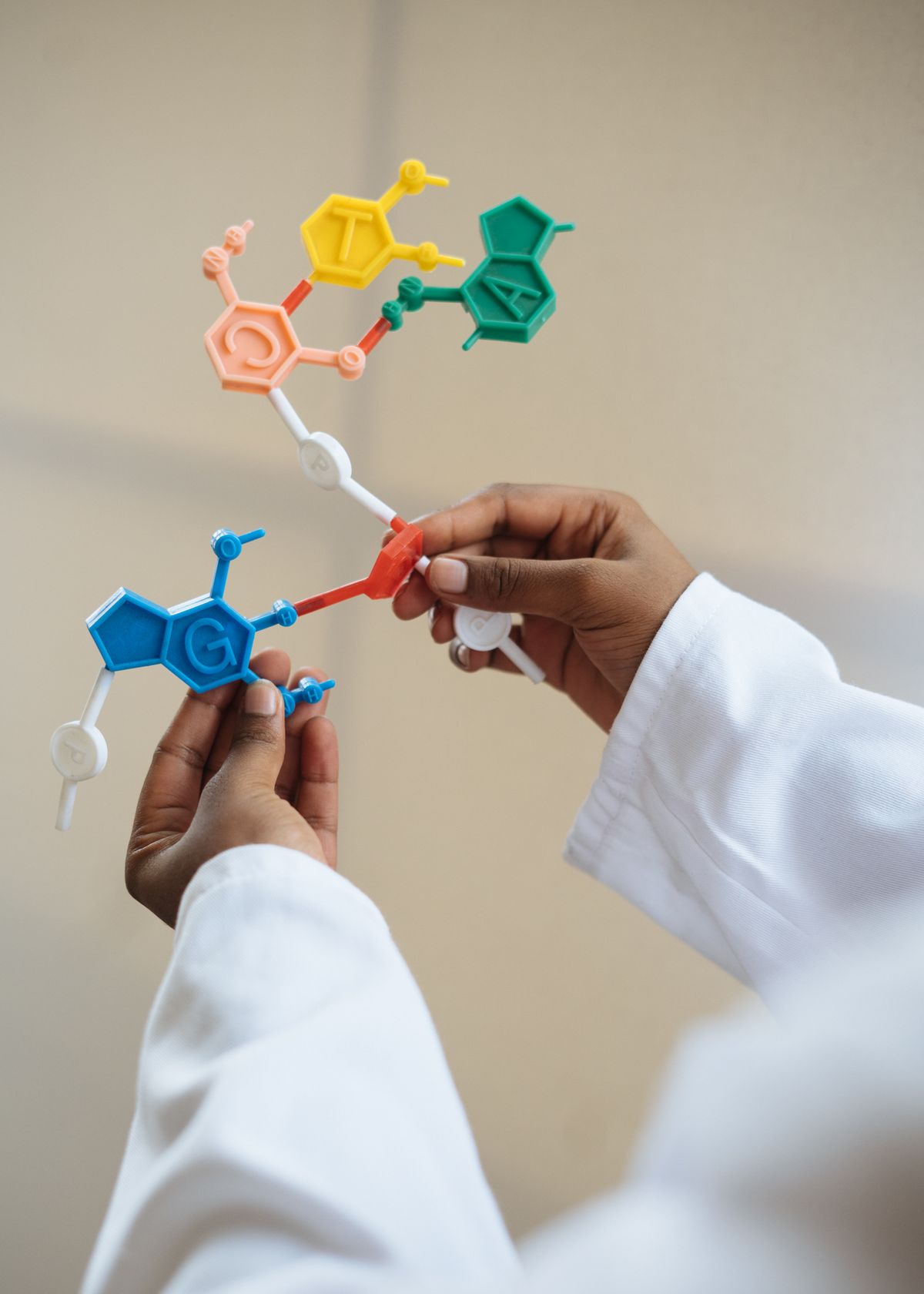
Once the raw IC50 data — a standard measure of how effectively a compound inhibits a biological target — is extracted and cleaned, it is converted into pIC50 values (a logarithmic scale more suited for machine learning). The pipeline then uses RDKit, an open-source cheminformatics library, to standardize molecular structures and compute Morgan fingerprints: numerical representations of molecular structure that a machine learning model can interpret.
The core model is a Random Forest, trained using a scaffold split. This is a critical methodological choice: unlike a random train-test split, a scaffold split separates compounds by their core chemical structure, ensuring the model is genuinely tested on its ability to generalise to new chemical space rather than just memorising closely related variants. According to research published on arXiv covering best practices in computational drug discovery, scaffold splits are considered a gold standard for realistic model validation in QSAR (Quantitative Structure-Activity Relationship) modelling.
Model interpretation is handled by SHAP (SHapley Additive exPlanations), a mathematically grounded framework for explaining machine learning predictions. SHAP values reveal which molecular features most strongly drive predicted potency, making the model's reasoning transparent and auditable — a property that increasingly matters not just scientifically, but regulatorily. Finally, the pipeline uses BRICS (Breaking of Retrosynthetically Interesting Chemical Substructures) to fragment known active compounds and recombine them into novel candidate molecules, which are then ranked by the trained model.
Why Developers and IT Decision-Makers Should Pay Attention to This
At first glance, drug discovery might seem distant from the concerns of a software developer or IT manager. But the architecture described in this tutorial is deeply familiar: data ingestion, cleaning, feature engineering, model training, explainability, and generative output. This is standard ML engineering. The domain is biology; the craft is software.
This convergence is significant for several reasons. First, it signals a broader trend toward AI tools that operate across disciplinary boundaries. A developer proficient in Python, scikit-learn, and SHAP can, with domain-appropriate libraries like RDKit, contribute meaningfully to biomedical research. Organisations building internal AI capabilities should note this: the skills gap between general ML engineering and specialised scientific AI is narrowing fast.
Second, the pipeline's reliance on entirely open-source components — with no proprietary APIs, cloud lock-in, or vendor dependencies — directly speaks to the digital sovereignty concerns that European businesses and policymakers are increasingly voicing. The tools used here (ChEMBL, RDKit, SHAP, scikit-learn) are all freely available, community-maintained, and can be run entirely on-premises. For organisations subject to GDPR or operating in sensitive sectors, this matters. A McKinsey report on AI in healthcare has highlighted that data governance and auditability are among the top concerns for European organisations deploying AI in regulated environments.
Third, the explicit use of SHAP for explainability aligns directly with the requirements being codified in the EU AI Act. High-risk AI applications — and drug discovery tools clearly qualify — must demonstrate transparency and human oversight. SHAP provides exactly this: a mathematically rigorous method for decomposing each prediction into the contribution of individual input features. As the EU AI Act moves toward full enforcement, developers building AI systems in regulated domains will need to incorporate explainability frameworks as a standard engineering practice, not an afterthought.
"Explainability is no longer a nice-to-have in regulated AI applications — it is rapidly becoming a legal requirement. Tools like SHAP represent the engineering layer that connects model performance to regulatory compliance."
— AI governance researcher, European Bioinformatics Institute (EMBL-EBI)Open-Source vs. Proprietary AI in Scientific Research: How the Approaches Compare
The pharmaceutical and biotech industries have historically invested heavily in proprietary computational tools. Companies like Schrödinger and OpenEye have built significant businesses around licensed molecular modelling software. But the open-source ecosystem has matured to a point where, for many tasks, it is competitive — and in some respects superior, particularly regarding auditability and reproducibility.
| Dimension | Open-Source Stack (RDKit, SHAP, ChEMBL) | Proprietary Platforms |
|---|---|---|
| Cost | Free / community-supported | High licensing fees |
| Auditability | Full source code transparency | Black-box in most cases |
| Data sovereignty | Fully on-premises deployable | Often cloud-dependent |
| Regulatory alignment | SHAP/LIME for explainability | Varies; often limited |
| Community & updates | Active open development | Vendor-controlled roadmap |
| Integration flexibility | High (Python ecosystem) | Often restricted APIs |
Research published in the Journal of Cheminformatics has consistently shown that open-source QSAR pipelines, when properly validated, deliver predictive performance comparable to commercial platforms for many drug discovery tasks. The key differentiator is reproducibility: open pipelines can be independently verified, forked, and improved by the community — a model that mirrors the principles increasingly favoured by European research funding bodies such as the European Research Council.
EGFR C797S: Why This Specific Target Illustrates a Wider AI Challenge
EGFR (Epidermal Growth Factor Receptor) inhibitors are a class of targeted cancer therapies used primarily in non-small cell lung cancer. The C797S mutation is particularly problematic: it arises as a resistance mechanism against third-generation EGFR inhibitors like osimertinib, rendering them ineffective. Finding new compounds that remain active against C797S is an active area of oncology research, and the scarcity of approved drugs makes it an ideal test case for computational discovery approaches.
The challenge for any AI model here is generalisation: the model must predict potency for compounds it has never seen, based on structural features alone. The scaffold-split methodology in this pipeline deliberately makes this harder — and therefore more realistic. Most real-world drug discovery scenarios involve exploring genuinely new chemical space, not slight variations on known actives.
This generalisation challenge is not unique to drug discovery. It is the fundamental problem of any AI system deployed in a high-stakes domain: can it perform reliably on inputs that differ meaningfully from its training data? For developers building AI tools in other regulated sectors — financial risk modelling, fraud detection, medical imaging — the methodological discipline demonstrated here (rigorous train-test splits, explainability layers, systematic feature importance analysis) is directly transferable.
What AI-Powered Drug Discovery Means for European Regulators and Policy Professionals
The EU AI Act classifies AI systems used in healthcare and drug development as high-risk, subject to stringent requirements around transparency, human oversight, and documentation. The pipeline described in this tutorial demonstrates, almost incidentally, what compliance-by-design can look like in practice. Every step is logged, reproducible, and interpretable. The SHAP layer provides a ready audit trail for regulators asking why a particular compound was ranked highly.
For policy professionals, this raises important questions about how AI regulation should be structured. Mandating explainability, as the EU AI Act effectively does for high-risk systems, creates a natural alignment with best scientific practice — SHAP-based explanation is not just a regulatory box-tick; it is genuinely useful for researchers trying to understand what chemical features drive drug potency. Good regulation and good science, in this case, point in the same direction.
The use of ChEMBL — a European public data infrastructure — also highlights the strategic value of open biomedical databases. According to the European Medicines Agency's guidelines on AI in pharmaceutical development, data quality and provenance are foundational requirements for any
Originally reported by MarkTechPost. Summarised and curated by European Purpose.