The Crash Loop That Produced the World's Most-Built Light Aircraft Company
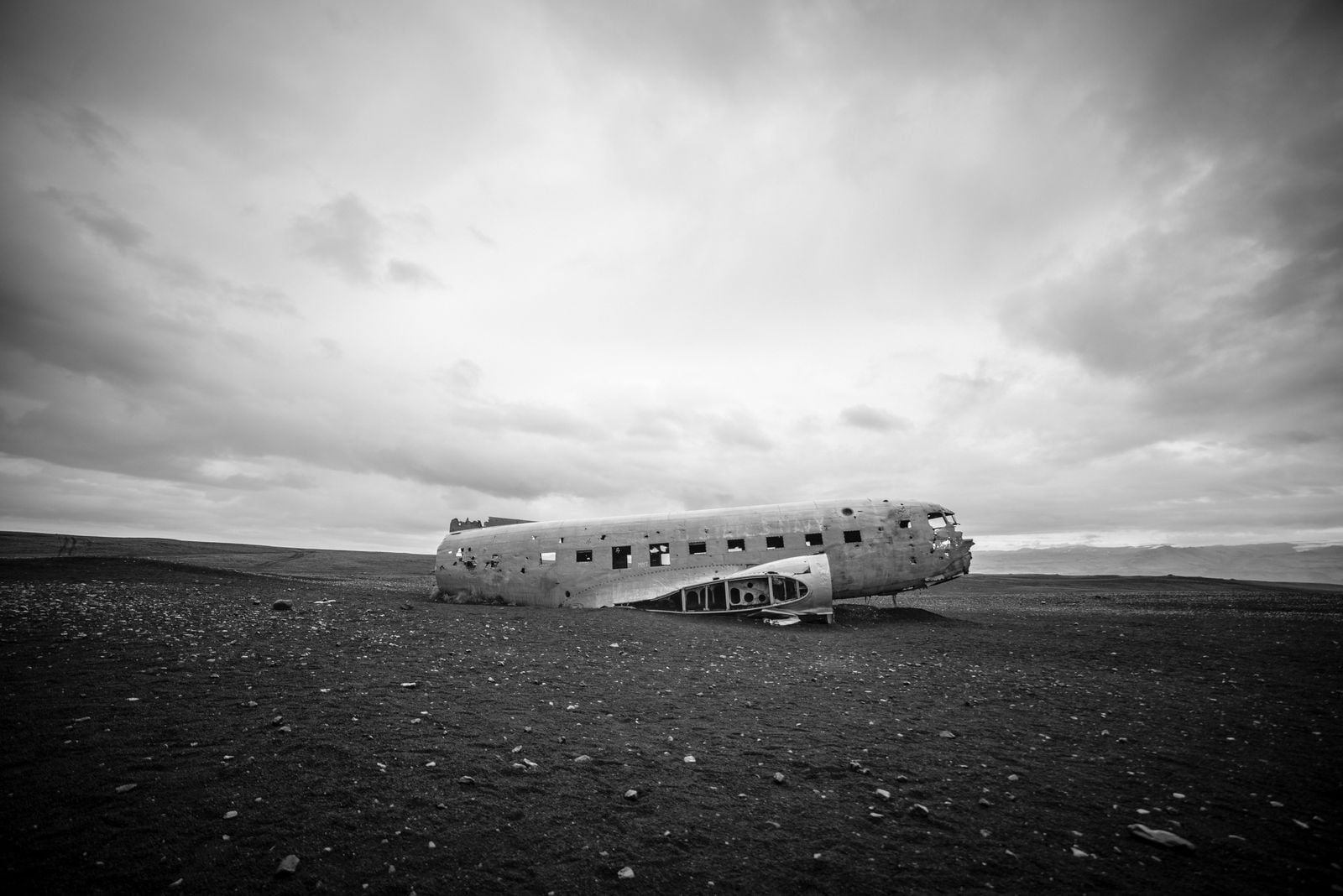
Before flight schools existed west of the Mississippi, an Oklahoma auto dealer named Clyde Cessna assembled a mail-order monoplane, drove it out to the salt flats of northern Oklahoma, and proceeded to crash it — at least thirteen times. There were no instructors available, no reliable manuals, and no experienced pilots within reach who could explain what he was doing wrong. What Cessna had instead was a repeatable process: crash, assess, rebuild, try again. That iterative learning loop, executed in 1911 without the language of modern product development, eventually gave rise to the Cessna Aircraft Company — today recognised as the manufacturer of more light aircraft than any other company in history. For developers, privacy engineers, and tech founders operating in environments where no established playbook exists, the story is more than historical curiosity. It is a structural blueprint.
According to Silicon Canals, the method that eventually produced the world's most-built light aircraft company began as a crash loop on an Oklahoma salt flat. Cessna didn't wait for permission, infrastructure, or expert guidance. He used what was available — a hand-built monoplane, flat ground, and a willingness to destroy his work in order to understand it. In the vocabulary of modern software development, he was running a tight build-test-iterate cycle in a zero-documentation environment.
What Happens When There Are No Manuals Worth Trusting?

The parallel to early-stage technology development is not metaphorical — it is structural. In 1911, aviation was roughly where decentralised cloud infrastructure or sovereign AI tooling is today: technically possible, practically uncharted, and almost entirely dependent on practitioners who are willing to operate without verified guidance. There were no FAA-certified flight schools. There were no standardised training manuals. There was, effectively, no established community of practice. Cessna's only feedback mechanism was the crash itself.
This mirrors the experience of many teams building privacy-first systems, sovereign cloud infrastructure, or GDPR-compliant data architectures in jurisdictions where regulatory guidance still lags behind technical reality. As Wired has documented in its coverage of iterative development culture, the most durable technical organisations are often those that institutionalise failure as a data source rather than a source of shame. Cessna did exactly this — and he did it decades before the term "fail fast" entered the product management lexicon.
What made Cessna's approach reproducible was not bravado. It was discipline. Each crash was, in effect, a controlled experiment — or as controlled as a hand-built monoplane on a salt flat could be. He wasn't crashing randomly. He was crashing systematically, extracting signal from each failure, and modifying the aircraft accordingly. This is precisely the mindset that open source contributors, security researchers, and infrastructure engineers apply when they document their failures publicly, file detailed bug reports, and push post-mortems to shared repositories.
"The people who build enduring systems are rarely the ones who had the best starting conditions. They're the ones who had the best relationship with failure — who could extract information from a crash without being destroyed by it."
— Aviation historian and innovation researcher perspective on the Cessna methodologyHow Iterative Learning Innovation Maps to Modern Software Development
The Cessna methodology — assemble what you have, test it to destruction, rebuild with what you learned — has direct equivalents in how the most impactful open source projects and privacy infrastructure tools have been developed. Consider the trajectory of tools like WireGuard, the lean VPN protocol that a single developer built and iterated publicly before it was eventually merged into the Linux kernel. Or the early development of Let's Encrypt, which had to operate in a landscape where free, automated certificate provisioning was considered impractical by established players. Both projects operated in the Cessna mode: no established playbook, high tolerance for visible failure, systematic iteration.
Research from the Harvard Business Review on failure-tolerant leadership argues that organisations which structurally reward learning from failure — rather than simply avoiding it — consistently outperform peers in complex, rapidly evolving domains. The aviation industry of 1911 was precisely such a domain. So is the current landscape of European digital sovereignty, where organisations are building data infrastructure in jurisdictions without comprehensive precedent, navigating GDPR enforcement that evolves case by case, and making architectural decisions about cloud sovereignty without decades of case law to guide them.
For IT decision-makers and policy professionals operating in this environment, the Cessna story carries a specific implication: the absence of a reliable manual is not a reason to wait. It is a reason to begin iterating, to treat each implementation as a source of operational intelligence, and to build institutional knowledge through documented failure rather than deferred action.
Why the Frontier Mindset Matters for European Digital Sovereignty

Europe's push toward digital sovereignty — reflected in frameworks like GAIA-X, the European Data Act, and national cloud strategies across Germany, France, and the Netherlands — is, in structural terms, a frontier situation. The organisations building sovereign cloud alternatives, privacy-preserving AI systems, and GDPR-compliant data pipelines are doing so in a landscape where best practices are being written in real time, where enforcement guidance from data protection authorities continues to evolve, and where no established vendor has a complete, validated answer.
A McKinsey Digital analysis of data sovereignty adoption found that organisations that moved earliest into sovereign infrastructure — despite incomplete standards and uncertain regulatory outcomes — developed durable competitive advantages in compliance readiness, vendor independence, and institutional capability. The same pattern holds in aviation history: those who flew first, crashed most, and learned fastest ultimately defined the industry's standards rather than inheriting them.
This is not an argument for recklessness. Cessna's thirteen crashes happened on flat, open ground — an environment deliberately chosen to make failure survivable. The equivalent in technology is building test environments, publishing post-mortems, contributing to open source communities, and engaging proactively with regulatory bodies rather than waiting for definitive guidance that may arrive too late to inform architectural decisions. Survivable failure, systematically processed, is how frontier expertise is built.
| Cessna's 1911 Context | Modern Tech Equivalent | Outcome |
|---|---|---|
| No flight schools available | No established GDPR-cloud architecture playbook | Self-directed iteration becomes competitive advantage |
| No manuals worth trusting | Evolving regulatory guidance, shifting enforcement | Practitioners write the standards themselves |
| No nearby expert to consult | Limited pool of sovereign cloud specialists | Community-driven knowledge (open source, shared post-mortems) |
| Thirteen crashes on flat ground | Staged rollouts, sandbox environments, public bug disclosure | Each failure yields actionable technical intelligence |
| Hand-built monoplane from mail-order parts | Open source tooling assembled into sovereign stacks | Custom infrastructure built on reusable components |
What Developers and Founders Can Actually Do With This Story
The risk of invoking historical analogies in technology contexts is that they become motivational wallpaper — interesting, then ignored. The Cessna story is more operationally specific than that. There are concrete practices it points toward, particularly for teams building in frontier technical or regulatory environments.
First, choose your crash environment deliberately. Cessna didn't crash into buildings — he crashed on flat, open ground where the failure was survivable and the debris field was recoverable. The equivalent for software teams is maintaining clean separation between production and experimental environments, building staging infrastructure that genuinely replicates production conditions, and ensuring that failures generate logs detailed enough to be useful. The crash is only as valuable as the data it produces.
Second, treat iteration count as a success metric, not a failure metric. Cessna crashed thirteen times before achieving sustained flight. If the number had been three, he would have had less accumulated knowledge. High iteration velocity, in environments where each cycle generates real learning, is a sign of a healthy development process — not a sign that something is wrong. As TechCrunch has reported on high-performing engineering teams, the organisations with the highest deployment frequency and fastest recovery times consistently outperform those optimised to avoid failure entirely.
Third, publish your post-mortems. Cessna's crashes were observable. Anyone who visited the salt flats could see what had happened, what had broken, and what had been rebuilt. In technology, this translates to public bug disclosure, open source contribution, shared incident reports, and transparent communication with regulators about implementation challenges. The visibility isn't a vulnerability — it's a mechanism for accumulating community knowledge and establishing credibility as a practitioner who learns rather than conceals.