Why Women in Computer Science Are Redefining What a Tech Career Looks Like
Not every computer scientist grew up writing code in their bedroom. For Harsha Koorimannil Valiyamannil, the path to a first-class honours degree in computer science at Ulster University began not with a compiler, but with a sketchpad. Her story — moving from animation and graphic design studies in Kerala, India, to building software and reviving a Women in STEM society in Belfast — is a timely reminder that the tech industry's talent pipeline depends as much on breaking down cultural and geographic barriers as it does on technical training. In an era where digital sovereignty, ethical AI, and accessible technology have become policy priorities across Europe, the question of who gets to build that technology has never been more urgent.
"I wasn't one of the kids who grew up coding, but I have always loved a good puzzle," Koorimannil Valiyamannil told SiliconRepublic.com. "I enjoy spotting patterns and figuring out how things work, so when it came to choosing a path, computing science felt like a natural fit for how my brain works. I knew I would enjoy the logical side of it, but what surprised me most was how much room there is for creativity." That observation — that computer science is as much a creative discipline as a technical one — sits at the heart of a broader conversation happening across European universities and tech firms about how to attract and retain diverse talent.
From Pixels to Programmes: How a Design Background Became a Technical Superpower

Koorimannil Valiyamannil's educational background in animation and graphic design — combined with a consistent aptitude for mathematics — meant her transition into computer science was less a leap into the unknown and more a natural convergence of existing strengths. Working with design software, she began asking questions that designers rarely get to answer: "If I built this, what would I add?" and "How could I make this better?" These are precisely the questions that drive product development cycles in agile software teams.
Her artistic training, she explains, shaped the way she approaches technical problems. It gave her the capacity to experiment freely, to view a challenge from multiple perspectives simultaneously, and crucially, to communicate complex ideas in ways that non-technical stakeholders can understand and act on. For IT decision makers and product leads, this combination — sometimes called "T-shaped" skills — is increasingly valued. McKinsey research on workforce development consistently highlights that professionals who combine deep technical competency with strong communication and design thinking are disproportionately effective in cross-functional roles.
"I loved that computing gave me a highly practical toolkit to merge problem-solving with creative design and build tangible things people can actually experience," she said. "That is what continues to drive my career path. I want to build accessible technology that goes beyond just being functional. I believe the best solutions are the ones that understand the people using them, consider their needs and make their everyday experiences genuinely better."
This ethos — that good software must be human-centred, not merely technically sound — aligns closely with European regulatory thinking. The EU's proposed Accessibility Act requires that digital products and services meet specific accessibility standards, and GDPR itself is, at its core, a user-rights framework. Designers who become developers, or developers who think like designers, are arguably better equipped to build compliant, inclusive products from the ground up.
Relocating From Kerala to Belfast: The Personal Cost of Chasing a Tech Career
The decision to leave Kerala for Belfast was not taken lightly. Koorimannil Valiyamannil describes circumstances at home that limited personal independence, and a desire to build a life on her own terms. The move was, by her own account, bittersweet — but transformative. "Here, I have learned how to chase opportunities without having to worry or hold back. Even something as simple as spending late nights studying in the library felt like an entirely new kind of freedom."
Her experience echoes a pattern well-documented in the international student and skilled migration literature. According to data from the Higher Education Statistics Agency (HESA), UK universities host hundreds of thousands of international students annually, many from South Asia, drawn by the combination of globally recognised degrees and post-study work opportunities. For women in particular, studying abroad can represent a significant expansion of professional and personal agency — though it comes with well-documented challenges around isolation, belonging, and cultural adjustment.
"The initial isolation was the hardest part, but it pushed me to step out of my comfort zone and reach out," she said. "Over time, I became much more confident putting myself forward and started having the courage to try things I would never have considered before. Now, the people I have met have become a massive part of my journey. Building that solid foundation of friendships is what helped me turn a completely unfamiliar place into my own."
The numbers make clear that the challenge is systemic, not individual. Women remain significantly underrepresented in core technology roles across Europe, and the EU's own digital skills agenda has repeatedly flagged the talent gap as a structural threat to European technological competitiveness and digital sovereignty.
Rebuilding a Women in STEM Community From the Ground Up
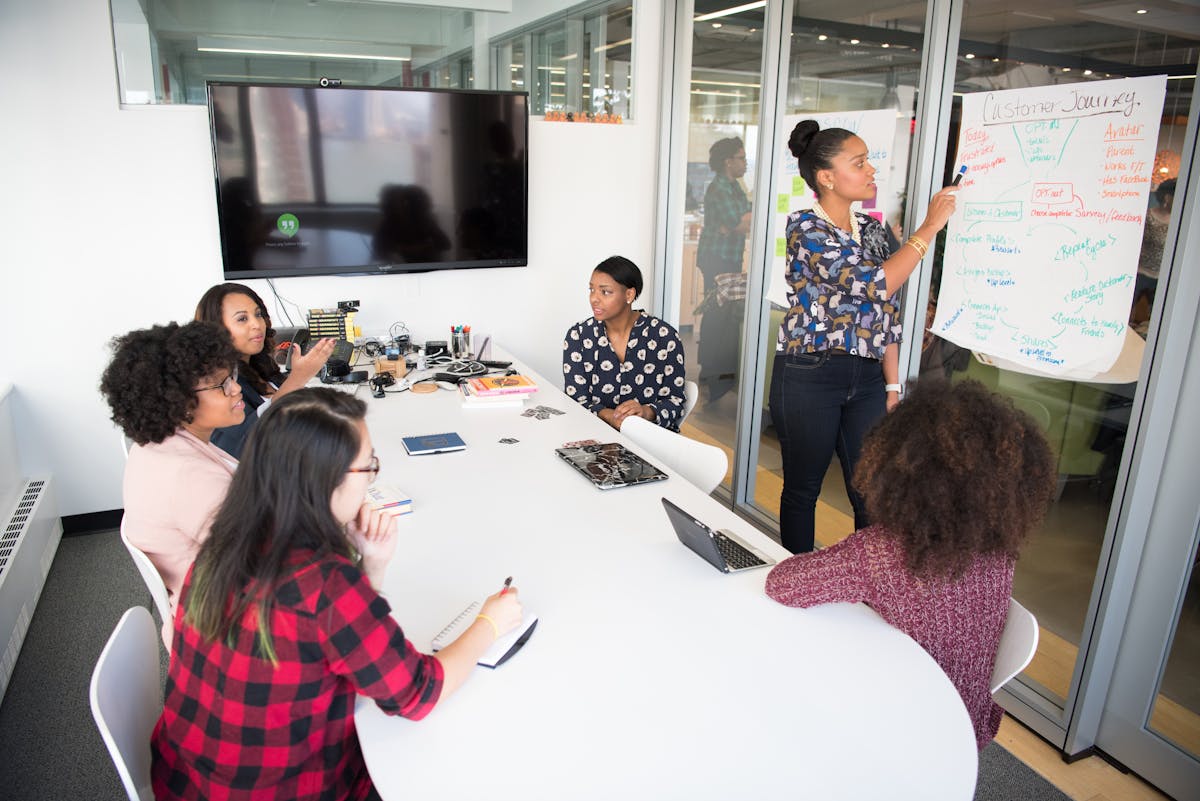
As Koorimannil Valiyamannil's confidence grew, she noticed that Ulster University's Women in STEM Society had become inactive. Rather than lamenting the gap, she and three peers set about rebuilding it. The revived society became a vehicle not just for peer support, but for genuine community infrastructure — culminating in the organisation of the Hack4Health Hackathon, a significant undertaking for any student team, let alone one rebuilding an organisation from scratch.
As society secretary, she applied her design background directly: creating branding, developing promotional materials, leading outreach, and coordinating with external organisations to secure sponsorship. This kind of student-led initiative has a measurable impact. Research published by the Chartered Institute for IT (BCS) has consistently found that peer communities and role models are among the most effective interventions for improving retention of women in computing programmes — more effective, in many cases, than curriculum changes alone.
"Rebuilding the society and pulling off an event of that scale was a massive amount of work. It was a crash course in the logistics of community building. It also proved that we could actually execute ambitious ideas from the ground up just by stepping up and trying."
— Harsha Koorimannil Valiyamannil, Computer Science Graduate, Ulster UniversityThe Hack4Health format is itself significant. Health technology is one of the fastest-growing verticals in European tech, and hackathons focused on social impact have become an important on-ramp for students interested in building technology that aligns with European values — accessibility, privacy, and public benefit — rather than purely commercial outcomes. For developers and product professionals looking to understand where Europe's next generation of ethically-minded technologists is coming from, events like Hack4Health are worth paying attention to.
| Initiative | Primary Impact | Relevance to European Tech Goals |
|---|---|---|
| Women in STEM Society (Ulster) | Peer support, retention, confidence-building | Closing digital skills gap; diversity in tech workforce |
| Hack4Health Hackathon | Applied problem-solving; cross-disciplinary teams | Health tech innovation; ethical-by-design culture |
| Design-to-development career pathway | Broader talent pool; human-centred products | Accessibility compliance; GDPR-aligned UX thinking |
| International student pipelines (UK/EU) | Global talent attraction; skills transfer | Digital sovereignty; EU digital skills strategy |
Ethical Technology and Digital Accessibility: The Career Goals Shaping Europe's Next Tech Generation
Koorimannil Valiyamannil is explicit about where she wants to take her career: ethical technology and digital accessibility. "I want to build solutions that actively break down digital barriers and ensure no one gets left behind," she says. This framing will resonate with anyone working at the intersection of tech and policy in Europe. The European Accessibility Act, which EU member states are required to implement, mandates that a wide range of digital products and services — from banking apps to e-commerce platforms — meet accessibility standards. The demand for developers who build accessibility in from the start, rather than retrofitting it later, is growing fast.
Equally, the push for human-centred technology aligns with growing regulatory and civil society pressure around AI ethics. The EU AI Act, now moving through implementation, introduces risk-tiered obligations that will require tech teams to think carefully about who their systems affect and how. Developers and product managers who have internalised inclusive design principles — as Koorimannil Valiyamannil clearly has — will be better positioned to navigate these requirements than those who treat compliance as an afterthought.